 Español
 English
 Italiano
 Français
 Deutsch


Isla de Lobos: the unspoilt islet you can see from Corralejo
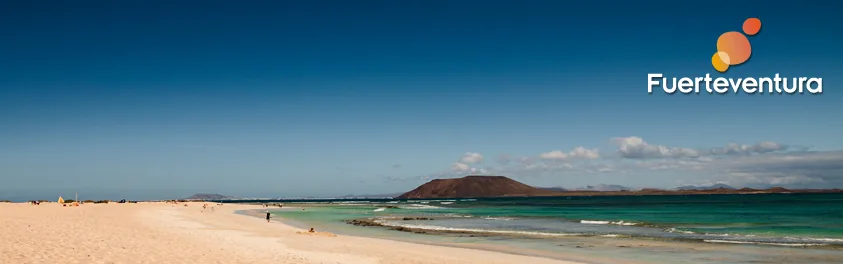
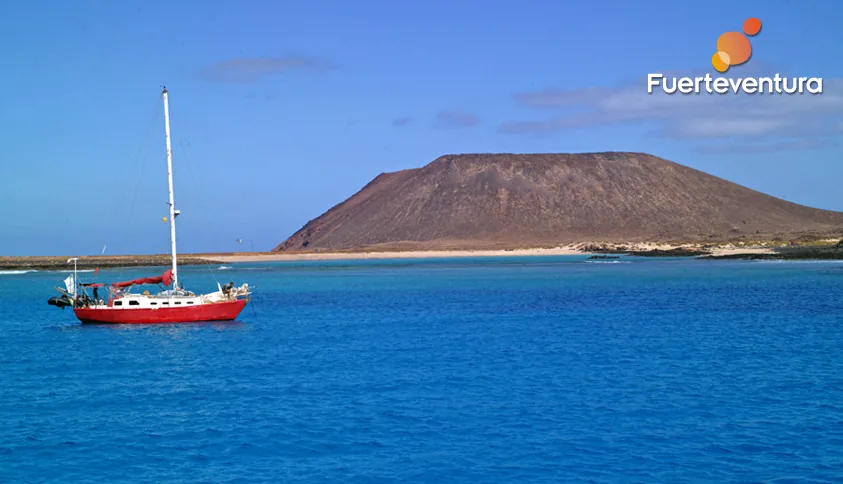
From the harbour at Corralejo you can see it, little more than two kilometres offshore: a low brown island without a single modern building on it. This is Isla de Lobos: a volcanic islet of around four and a half square kilometres, a Natural Park, uninhabited, and just fifteen minutes away by boat.
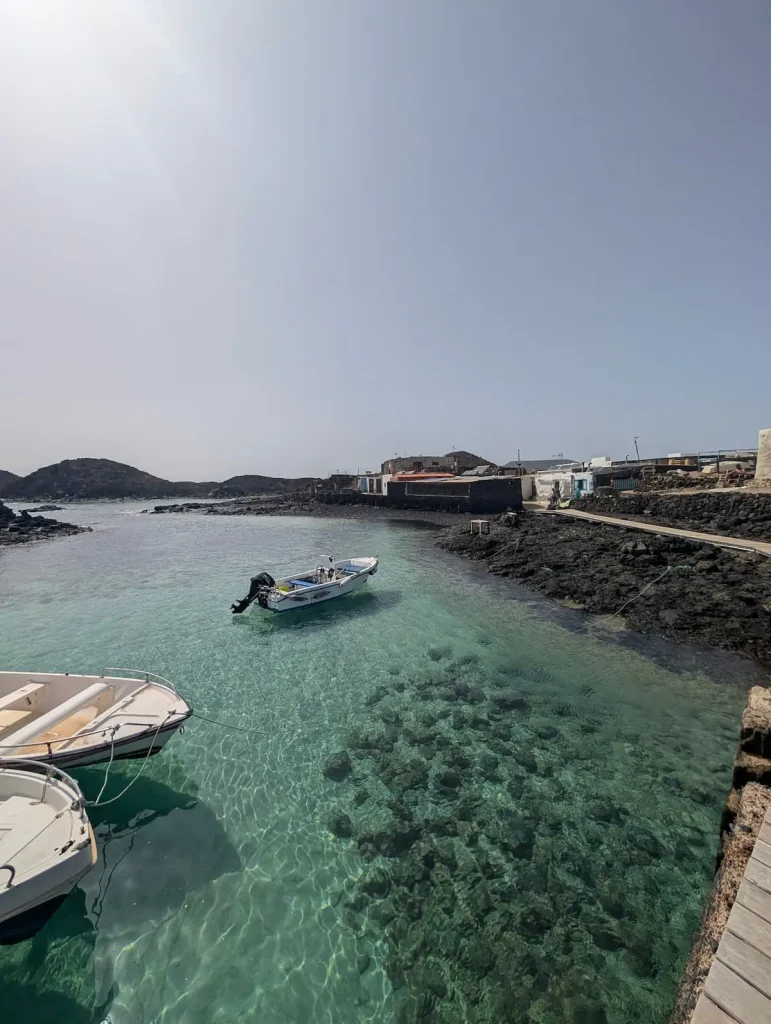
There are no hotels, no roads, no shops. There are footpaths, a lighthouse, a crater to climb, a turquoise lagoon ringed by fishermen’s huts — El Puertito — and a silence you won’t find anywhere on Fuerteventura. It is the island’s most popular day trip, and with good reason.
Two things worth knowing before you read on: you need a permit to land, and there is nothing to buy on the island, so everything you are going to need has to go with you in your rucksack.
The entry permit: compulsory and capped
Isla de Lobos is a protected area with a limit on visitor numbers. To come ashore you need a visitor permit, which is compulsory and free, issued by the Cabildo of Fuerteventura and applied for online, stating the date and the time slot.
The daily quota is small and in high season it sells out days in advance, so this is the first thing to sort out — before you even buy your boat ticket. Without a permit, the ferry company will not let you board.
The paperwork, the quotas and the ferry operators change from one season to the next, so the sensible thing is to check them on the site that does nothing else: laisladelobos.com, where you will find the full detail on permits, timetables and booking. If you just want a summary of the crossing, we have it in how to get to Isla de Lobos from Corralejo.
What to see on Lobos: the circular walk
The island is explored on a circular path of around 8 kilometres that starts and finishes at the jetty. It takes between 3 and 4 hours at an unhurried pace, which is more or less what a full-day visit allows with the usual boat time slots.
- 1El Puertito
A few minutes from where you land. A handful of whitewashed fishermen’s huts around a shallow turquoise lagoon, sheltered from the swell. It is the image everyone associates with Lobos and the best place on the island for a swim.
- 2The Punta Martiño lighthouse
At the northern tip, the furthest point of the walk. The path follows the coast, exposed to the wind, and from the lighthouse you can see Lanzarote straight ahead, remarkably close.
- 3Montaña de la Caldera
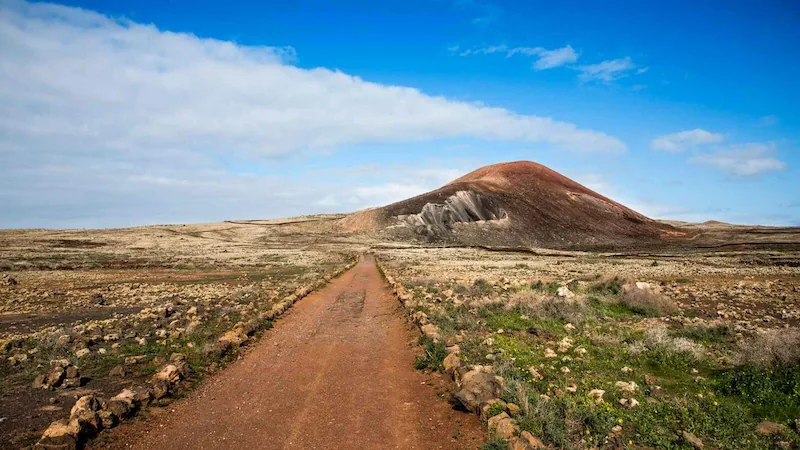
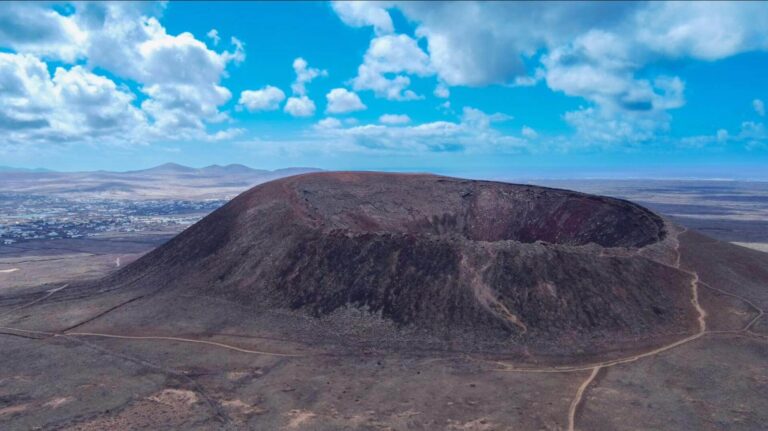
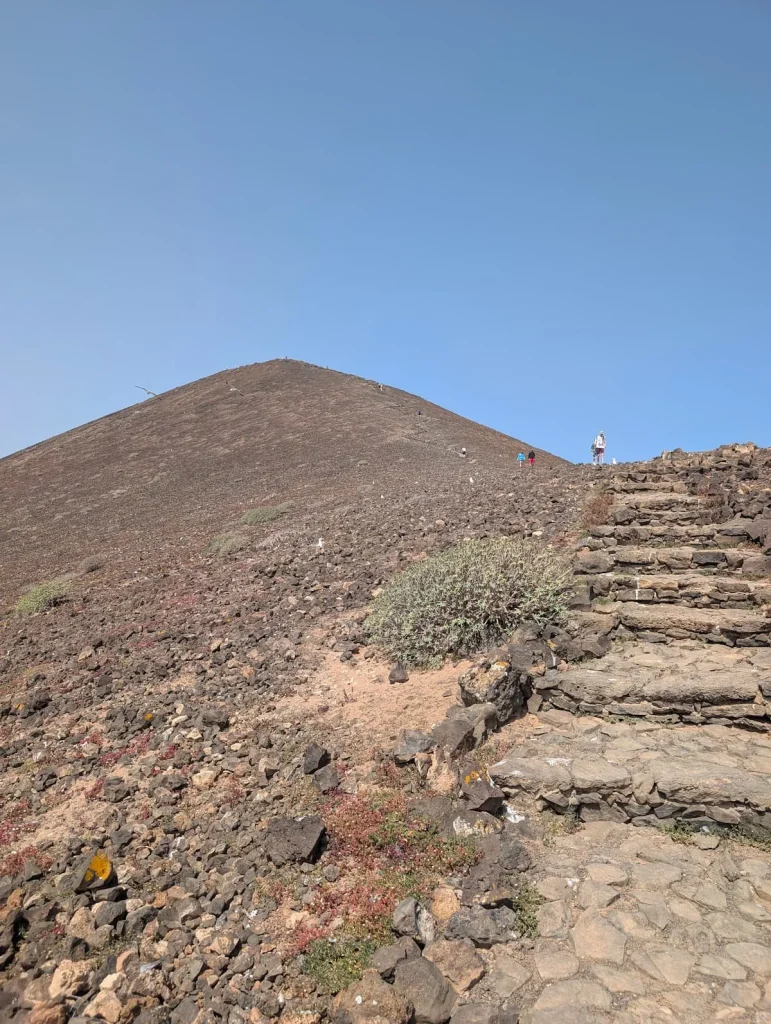
The island’s volcanic cone, a little over 120 metres high. The climb is steep but short: 15 or 20 minutes. From the top you can see the whole of Lobos, Corralejo to the south and Lanzarote to the north. It is the best view of the trip.
- 4Playa de la Concha
A beach of pale sand and calm water on the western side, on the way back round the circuit. Mind the name: this is not the Playa de La Concha in El Cotillo, which is on Fuerteventura and is something else entirely — you’ll find that one here.
- 5Las Lagunitas and the Salinas del Marrajo
Marshland and old salt pans in the north, of great ecological value. You take them in from the path, without straying off it.
What to pack
On Lobos there is no supermarket, no drinking fountain and no natural shade. Whatever you don’t bring, you won’t have:
Water, plenty of it. This is the most common mistake. Pack as though you were setting off on a half-day hike, because that is what it is.
Food. There is a single restaurant, at El Puertito, and it does not take bookings: it is first come, first served, and in high season it fills up. Don’t count on it for lunch: if you get a table, great; if not, you have your sandwich.
Closed shoes. The path is volcanic rock and walking it in flip-flops is a bad idea, especially on the climb up the caldera.
A cap, sun cream and a windbreaker. There is nowhere to shelter from either the sun or the wind.
A towel and swimwear for El Puertito, and take your rubbish home: there are no bins on the island and it is a natural park. The rules are on this page.
How Lobos fits into your trip
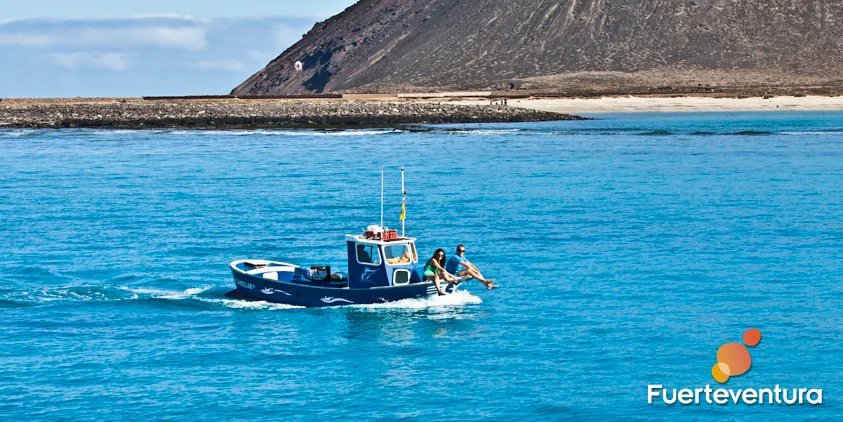
Lobos is a full-day excursion from the north of Fuerteventura, and it slots naturally into a stay in Corralejo. Departures leave from Corralejo harbour, the same place as the catamaran and glass-bottom boat trips, which are the alternative if you can’t get a landing permit or if you would rather have a shorter outing with the sailing as the main event.
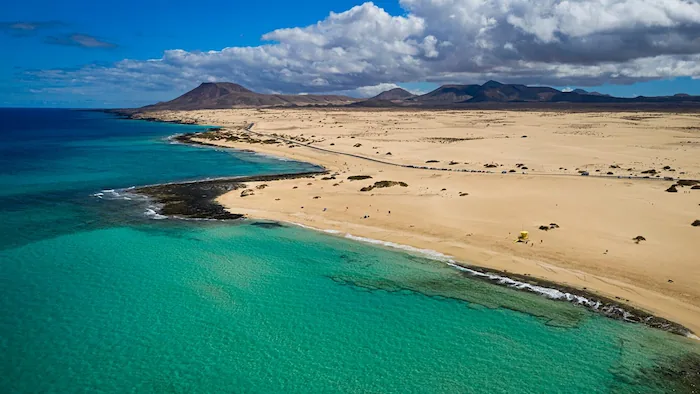
For the rest of the north — the Corralejo Dunes, El Cotillo, Calderón Hondo — there is our guide to what to see in northern Fuerteventura.
In pictures
Frequently asked questions about Isla de Lobos
Do you need a permit to visit Isla de Lobos?
Yes. It is compulsory and free, it is issued by the Cabildo of Fuerteventura and there is a limited daily quota. You apply online for a specific date and time slot, and it is worth doing well in advance because it sells out. The up-to-date detail is at laisladelobos.com.
How long does the boat take from Corralejo?
Around 15 minutes. Boats leave from Corralejo harbour, in the north of Fuerteventura.
How much time do you need to see Lobos?
The circular path is around 8 kilometres and takes between 3 and 4 hours of walking. With the boat each way, it is a full-day excursion.
Are there restaurants or shops on the island?
There is one restaurant only, at El Puertito, and it does not take bookings: it works on a first-come, first-served basis. There are no shops, no supermarket and no drinking water fountains. Bring water and something to eat.
Can you swim on Lobos?
Yes, and the best spot is the lagoon at El Puertito: turquoise, shallow and sheltered from the swell. Playa de la Concha on Lobos is the other option.
Can you stay overnight on Isla de Lobos?
No. It is an uninhabited protected area, with no accommodation and no camping allowed. Every visit is a there-and-back day trip.
Is the climb up Montaña de la Caldera hard?
It is steep but short, 15 to 20 minutes from the path. There is nothing technical about it, but you need closed shoes and water.
What if I can’t get a permit?
You can sail around the island without landing: the catamaran and boat trips from Corralejo cruise the area and swim in its waters without any need for a visitor permit, because the restriction applies to coming ashore.
Keep exploring