 Español
 English
 Italiano
 Français
 Deutsch


Fuerteventura: travel guide, beaches and boat trips
The oldest of the Canary Islands and the closest to Africa: more than 150 kilometres of beaches, volcanoes worn down by twenty million years of wind, and towns that look nothing like one another.
This guide brings together what is worth knowing before you come and what is worth seeing once you are here, along with the trips you can book on the spot.
Book in a minute
The most popular boat trips
Three excursions you can book online, with places confirmed straight away. They leave from Corralejo and Caleta de Fuste, the island’s two sailing harbours.

Catamaran from Caleta de Fuste
A day on board with swimming, snorkelling gear and lunch included.
See dates and prices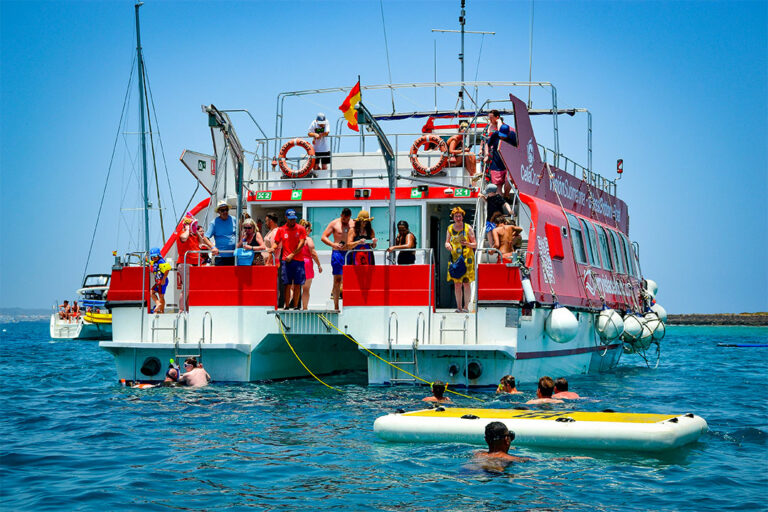
Mini-cruise to Isla de Lobos
Glass-bottom viewing, a snorkelling stop and an optional landing on the island.
See dates and prices
Discover Fuerteventura
A coast-to-coast tour with guide and transport, to see the island without driving.
See dates and pricesWhere it is and what it is like
The oldest of the Canary Islands
Fuerteventura is the easternmost island in the archipelago and the closest to the mainland: a little under a hundred kilometres separate it from the African coast. It is also the oldest, and that explains its landscape.
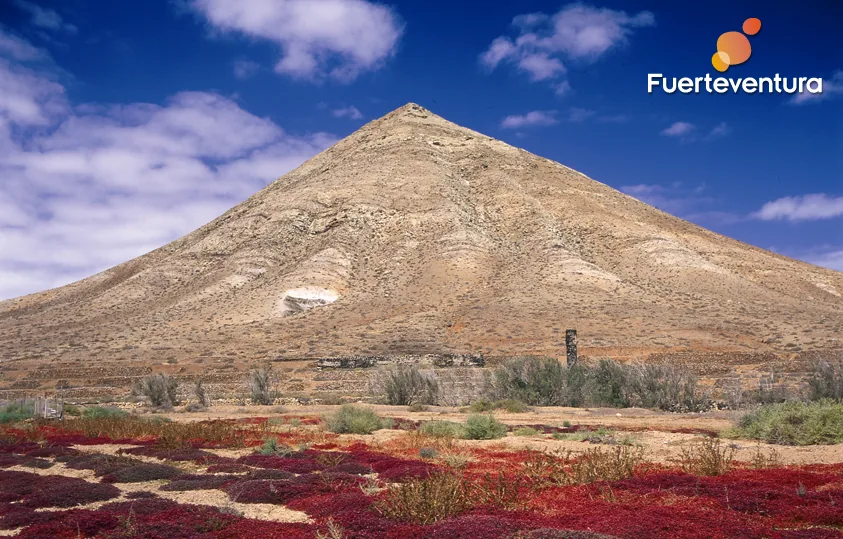
Here the volcanoes are worn down and the mountains are rounded, nothing like the young, abrupt relief of the western islands. The whole island has been a UNESCO Biosphere Reserve since 2009, and almost half its territory carries some form of protection.
The climate is the other reason to come: averages of 20 to 25 °C all year round, with no bad season. Spring and autumn are the best times, with the same weather as summer and far fewer people.
Fuerteventura’s essentials
What to see on the island
Nine places with a page of their own, from the dunes in the north to the sea caves in the west. These three are where almost everyone starts.
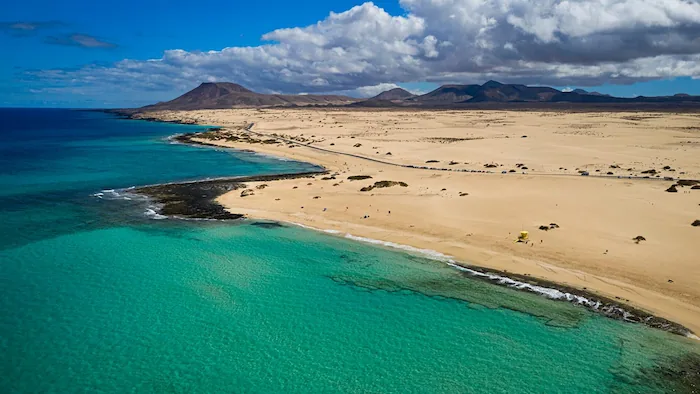
Corralejo Dunes
Eight kilometres of white sand of organic origin facing the sea, with free access and no opening hours.
See the park →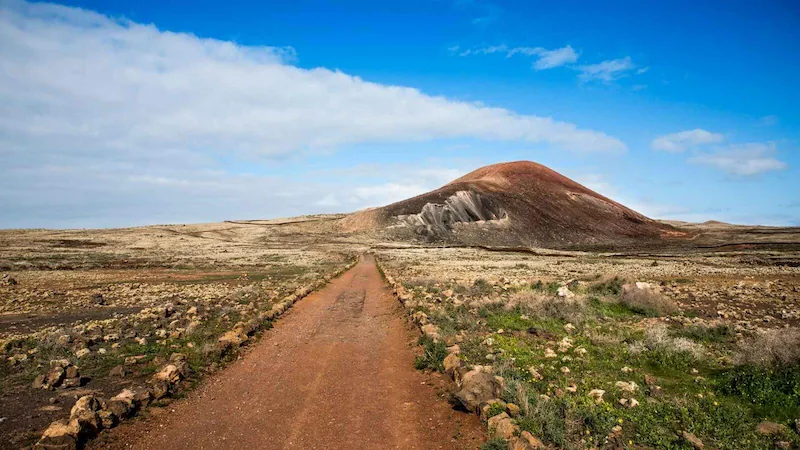
Calderón Hondo volcano
The easiest climb to a crater on the island, with Lanzarote in the distance from the rim.
See the walk →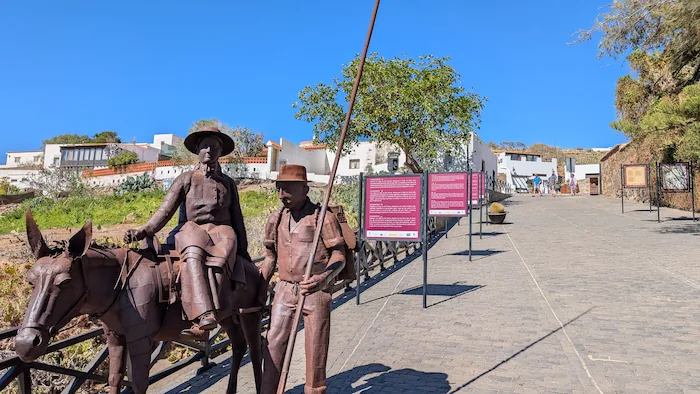
Betancuria
The island’s first capital, tucked into an inland valley and the coolest corner of Fuerteventura.
See the village →One minute of island
Fuerteventura on film
Audiovisual archive of the Fuerteventura Tourist Board
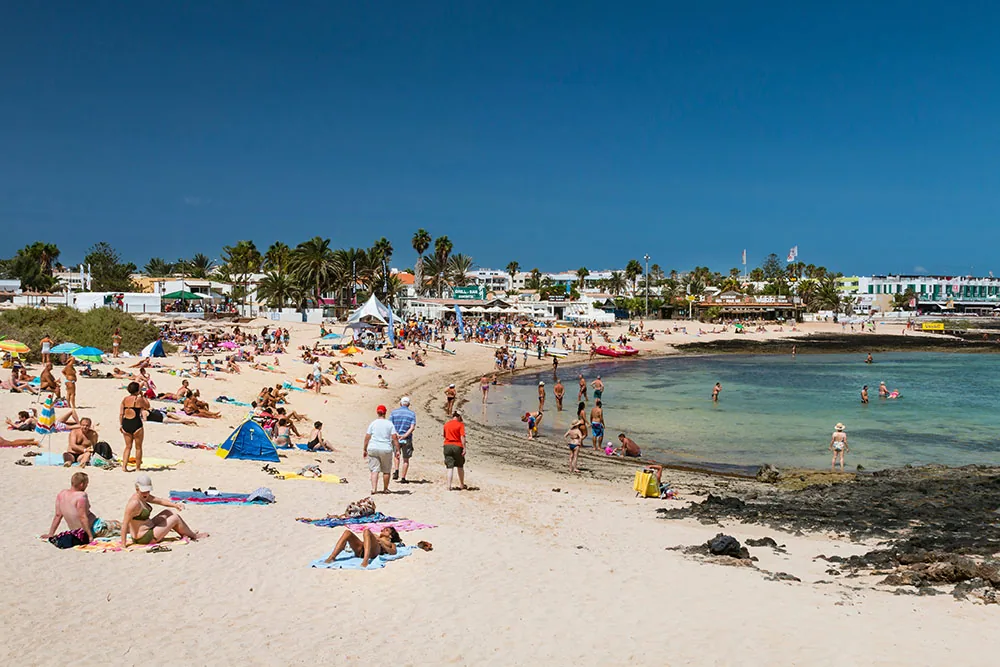
More than 150 kilometres of coast
The best beaches in Fuerteventura
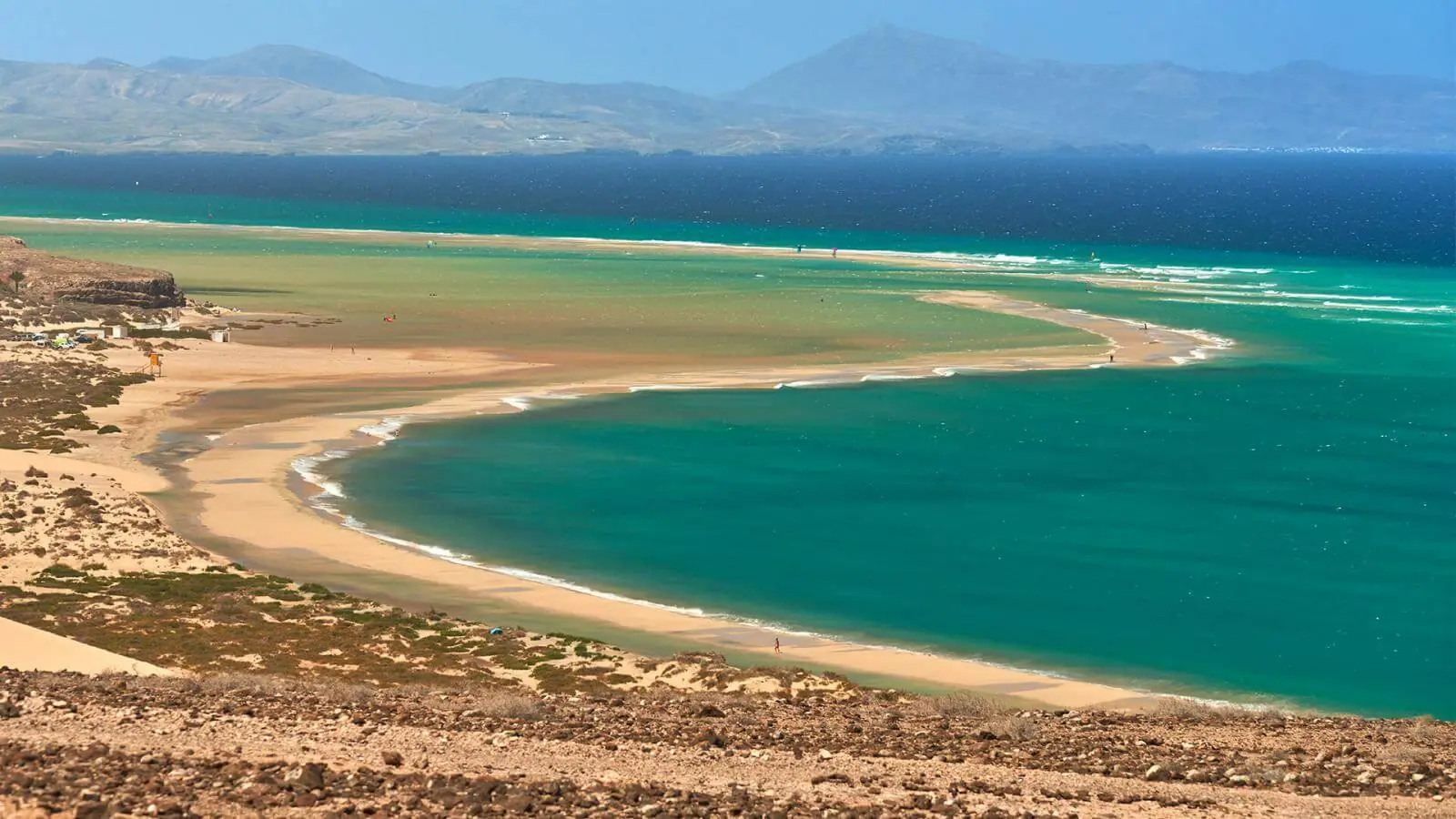
The island’s coastline is its greatest draw and it has everything: the immense sands of Jandía, the tidal lagoon at Sotavento, the sheltered coves of El Cotillo and the wild kilometres of Cofete, without a single lifeguard.
Each page explains what the sand is like, how the sea behaves, where to park and who it suits, because they are not all good for the same thing.
From north to south
The towns of Fuerteventura
You cannot understand the island from the beach alone. Its towns are small, white and very different from one another, and you can see the main ones in a couple of days.
Before you set off
Getting there and getting around
The island has a single airport, Fuerteventura (FUE), at El Matorral, about five kilometres from Puerto del Rosario. By sea there are ferries from Corralejo to Lanzarote and to Isla de Lobos, and from Morro Jable and Puerto del Rosario to the rest of the archipelago.
Once you are here, distance rules: a hundred kilometres end to end and the best of it spread out, so a hire car is all but essential. And there are two dirt tracks, the one to Cofete and the one to the Entallada lighthouse, which most companies exclude from their insurance cover.
Protected areas
Permits and rules worth knowing
Almost half the island is protected. There are only a few rules, but one of them catches a lot of people out.
Common questions
Frequently asked questions about Fuerteventura
When is the best time to go to Fuerteventura?
There is no bad season: averages sit between 20 and 25 °C all year round. Spring and autumn are the best times, with the same weather as summer and far fewer people.
Do you need a hire car?
Practically, yes, if you want to see more than your hotel area. The island is about a hundred kilometres long and what is worth the trip is spread from north to south. The buses cover the main axis well, but they do not reach the isolated beaches.
What permit do you need for Isla de Lobos?
An authorisation from the Cabildo, free and with a daily quota, but only if you are going to land. You apply online, or the ferry operator arranges it when you book. Sailing past the island without going ashore needs no paperwork at all.
Is it always windy?
It blows almost every day and it blows hard, especially on the east coast and across the La Pared isthmus. That is what has made Playa de Sotavento a world reference for windsurfing, and also what makes a windbreak very welcome on the beach.
What is the food like in Fuerteventura?
Majorero cheese, the first Spanish goat’s cheese to get a protected designation of origin, and fresh fish in the villages along the west coast. Those are the two things worth seeking out.
Book your trip and plan your stay
Sixteen departures you can book online, from the catamarans to Lobos to the half-hour activities in the harbour at Caleta de Fuste.