 Español
 English
 Italiano
 Français
 Deutsch


Mirador de Guise y Ayose: the two kings who shared the island
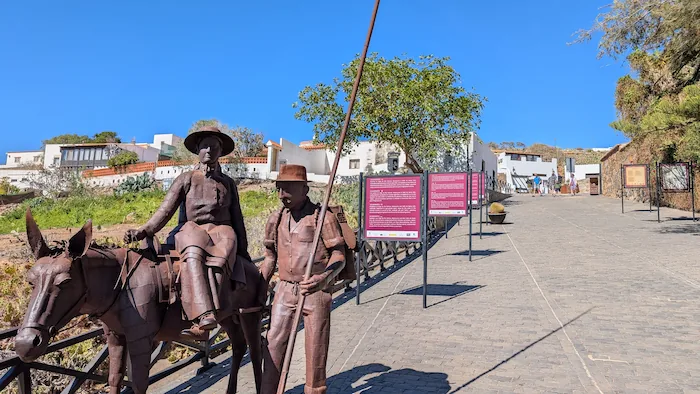
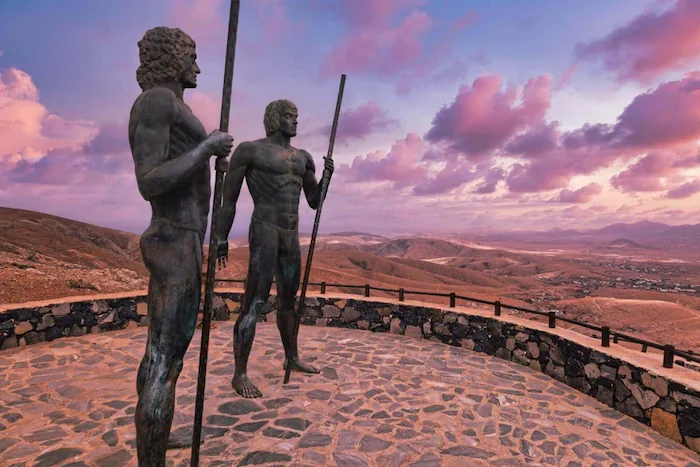
High on the road that crosses the central massif, two bronze figures some four metres tall look out over the valley. They are Guise and Ayose, the two aboriginal kings who ruled Fuerteventura before the conquest, and this is the viewpoint that carries their name.
The story they tell is the one that explains the island’s geography. Before 1402, Fuerteventura was not a single territory: it was split into two kingdoms divided by a stone wall across the isthmus of La Pared. Guise ruled Maxorata, the northern half – which is where the word majorero for a native of the island comes from – and Ayose ruled Jandía, the southern peninsula. Even today, when people talk about the Playa de Jandía, they are using the name of one of those two kingdoms.
It is a short stop – 15 or 20 minutes – but it is the one that puts everything else in context.
How to get there and where to park
The viewpoint sits on the FV-30 road, at around kilometre 21, on the stretch that links the Antigua and Villaverde area with Betancuria.
there is free parking right beside the statues. There is no walking to do: you park, cross a few metres of ground and you are on the viewing platform.
about 25 minutes.
under 10 minutes. Most people do the two together.
around 45 minutes through the interior.
What you can see from here
The viewpoint faces the Betancuria valley and the arid mountains that ring it. The contrast is what makes it: bare, earth-coloured slopes and, at the bottom, a patch of green with a white village in it. This is the only mountain landscape in Fuerteventura, and from up here you understand why the conquerors hid the island’s first capital down there.
On clear days the view stretches a long way inland. And the statues, with the valley behind them, make one of the most recognisable photographs on the island.
Two practical warnings
The wind. This is a high mountain pass, and it blows here almost constantly and hard. It is worth bringing a light jacket even in summer: you notice the difference in temperature from the beach you have just left.
It is a park-and-photograph stop. There is no trail, no visitor centre and no café. It is meant as a stop along the way, not somewhere to spend the morning. It fits perfectly halfway round the inland route.
Not to be confused with the Mirador de Morro Velosa
This is the most common mix-up in the area. On this same stretch of the FV-30 there are two different viewpoints: this one, Guise y Ayose, the one with the two bronze statues, out in the open and free to visit; and the Mirador de Morro Velosa, a building with picture windows and a café a little further up, with its own opening hours.
If you came looking for the statues, this is the one. Ideally you stop at both, because they are only minutes apart.
What to see near the viewpoint
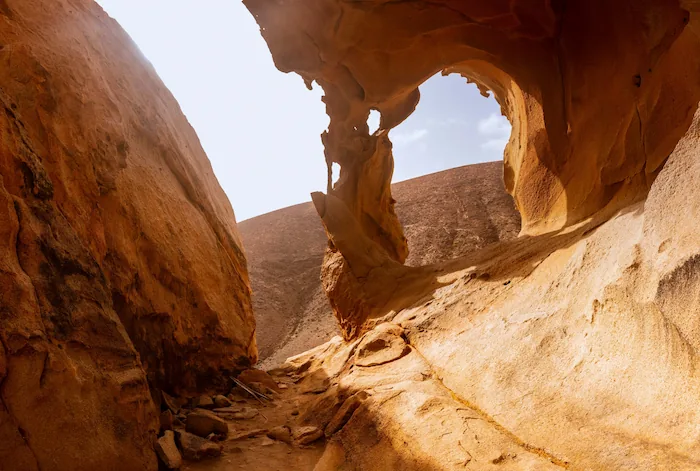
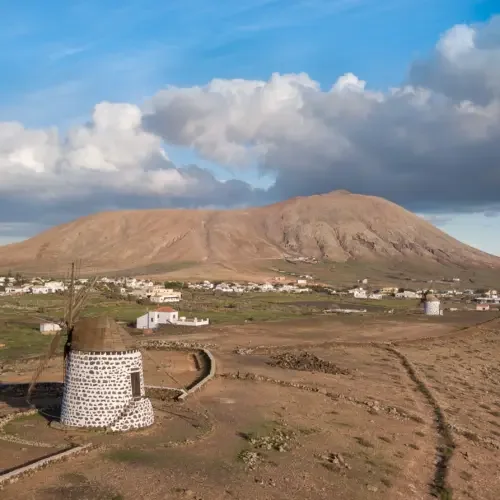
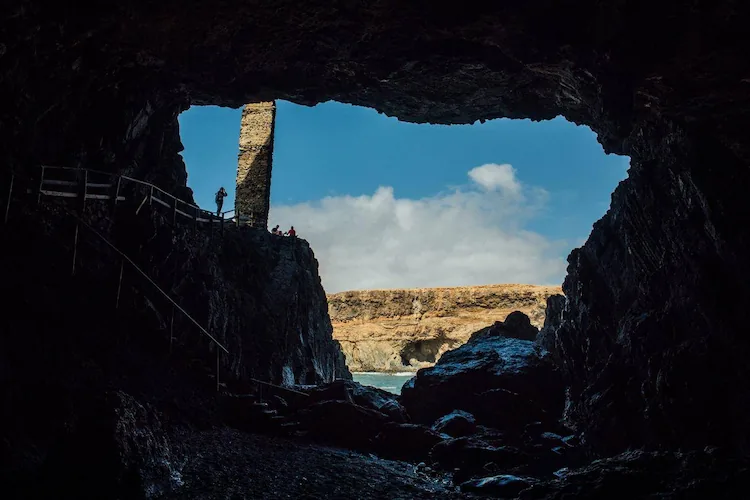
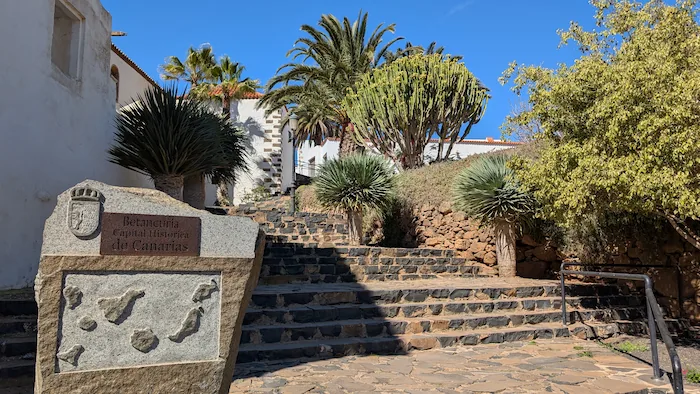
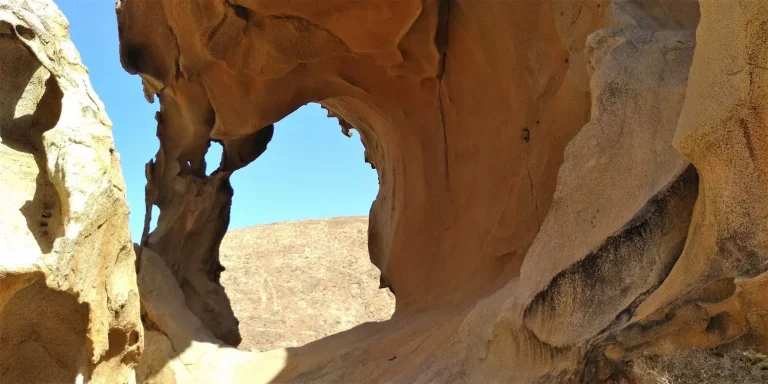
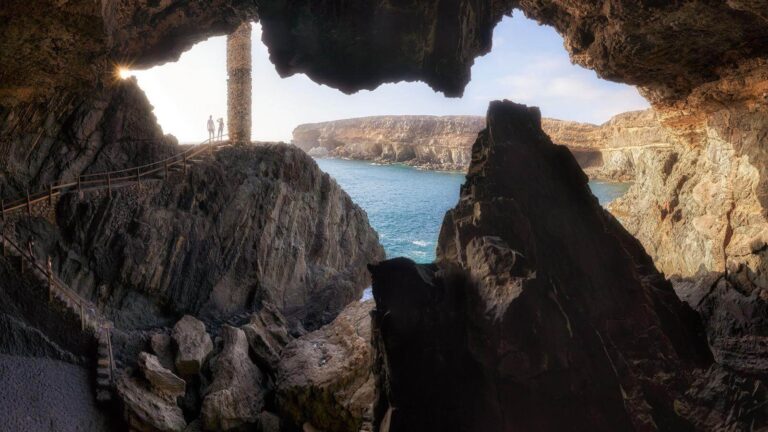
This stop strings together naturally with the rest of the island’s interior: Betancuria ten minutes away, the Arco de las Peñitas from Vega de Río Palmas, the Ajuy caves down on the west coast and Tindaya mountain if you head north. The full route is in our 5-day itinerary.
Frequently asked questions about the Mirador de Guise y Ayose
Who were Guise and Ayose?
The two aboriginal kings who ruled Fuerteventura before the Castilian conquest of 1402. Guise reigned over Maxorata (the north) and Ayose over Jandía (the south), two territories separated by a wall across the isthmus of La Pared.
How much does it cost to visit?
Nothing. The viewpoint is free to enter, it has no closing time and the parking is free as well.
How long should you allow for it?
Between 15 and 20 minutes. It is a stop by car: park, look, take photographs and move on.
Is the viewpoint in Betancuria?
It is on the road up to Betancuria, in the same massif and less than ten minutes from the village, though not in the village itself. It works as the gateway to the valley.
Is it accessible for people with reduced mobility?
Reasonably: the car park is right next to the statues and the approach to the platform is short and level. There are no long flights of steps and no footpaths to tackle.
When is the best time for a photograph?
Late afternoon, when the low light brings the colour out of the slopes and the statues stand against the sky. At midday the contrast is harsh and the bronze comes out flat.
How big are the statues?
About four metres each, in bronze, and they are placed so that you can walk around them and photograph them from several angles.
Keep exploring