 Español
 English
 Italiano
 Français
 Deutsch


Corralejo Dunes Natural Park: a white desert facing the sea
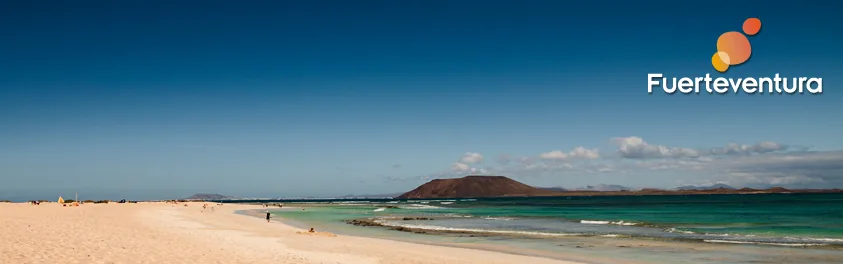
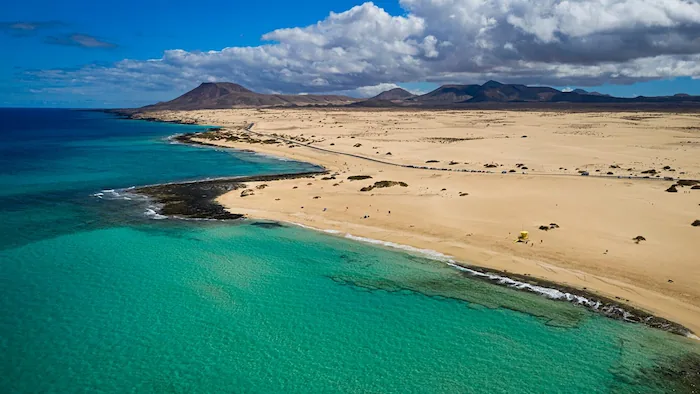
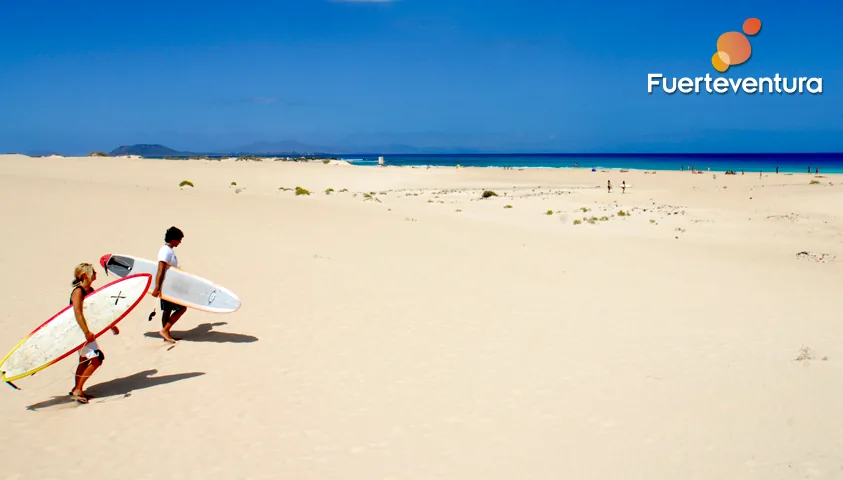
In the north of Fuerteventura, between the village of Corralejo and the road that runs down towards the capital, lies one of the most photographed landscapes in the Canaries: eight kilometres of white sand dunes rolling in from inland to die away on beaches of turquoise water. It has been a protected area since 1982 and is one of the few places in Europe where you can walk through a genuine desert with the Atlantic in view and the outline of Isla de Lobos on the horizon.
Visiting is free and unrestricted, it works at any time of year, and it comes in two versions: the half-hour one, for taking photos and getting back to the car, and the half-morning one, walking among the high dunes and down to an almost empty beach.
Why this sand doesn’t come from the Sahara
This is the island’s most repeated misconception. Despite Africa being a hundred kilometres away, the sand at Corralejo is not desert sand: it is organic in origin. It is made up of minute fragments of shells, carapaces and calcareous algae that the sea ground down over millennia and the wind pushed inland.
Hence its colour: not the ochre of the Sahara but an off-white that is almost luminous, and bright enough at midday to make you squint. And hence, too, its fragility, because that material does not regenerate: sand taken out of the park never comes back.
How to get to the Corralejo Dunes and where to park
The park has no gate and no ticket office. The FV-1 road, which links Corralejo with Puerto del Rosario, crosses it from north to south, and your visit begins wherever you decide to pull over.
5 minutes. As you leave the village heading south the dunes appear all at once on both sides of the tarmac.
about 30 minutes along the same FV-1. From the airport, around 35.
there are designated parking areas along the edges of the road, in the form of unsurfaced lay-bys. They are free and rarely fill up, but do make sure you get the car completely off the tarmac: the FV-1 is fast and the hard shoulder is narrow.
the service linking Corralejo with Puerto del Rosario runs along this road and you can get off at the foot of the dunes. It is convenient on the way out, but check the return timetable before you wander too far, because the stops are a long way apart.
The park’s beaches: Grandes Playas, El Moro and Bajo Negro
The park’s coastline is a succession of wide-open sands known collectively as Grandes Playas. These are not town beaches: there is no promenade, no buildings, no beach bar every hundred metres.
the broadest and most accessible stretch, the first you come to from Corralejo. Flat sand, clear water and plenty of space even in August.
a little more tucked away among the dunes, the favourite of anyone after peace and quiet who doesn’t mind a few minutes’ walk from the car.
the furthest south and the most solitary, with that characteristic mix of pale sand and dark volcanic rock that gives it its name.
These are open-sea beaches: the swell and the currents can be strong and there is no lifeguard anywhere in the park. If you are travelling with small children and want calm water, the alternative is at the other end of the north, at Playa de La Goleta or in the lagoons at El Cotillo.
Walking in the dunes: the free route across Grandes Playas
There is no marked path here, and that is part of the charm. The approach that works best is simple: park in one of the lay-bys and walk away from the road at right angles, towards the sea.
between 1 and 2 hours if you want to reach the shore without rushing.
on the highest dunes, about 200 metres from the tarmac. That is precisely the distance at which the road drops out of sight and the landscape turns into pure desert.
first thing in the morning or in the last hour of light. As well as dodging the heat, the low sun draws out the crests of the dunes and the sand turns from white to gold. At midday the landscape flattens and the light burns.
What to bring and which rules to respect
Two practical warnings that save a lot of grief: in the park there is no shade, no drinking water, no toilets and no bins, and the wind is part of the place on almost every day of the year.
water, a cap, sun cream and sunglasses. Pale sand reflects an enormous amount of light.
better barefoot or in sandals than in trainers, because the fine sand ends up inside everything.
a long-sleeved top and something to cover your face. Airborne sand is more of a nuisance than the sun.
And here is what you don’t do, because this is a protected area: no driving off the road, no taking sand or shells away, no camping and no fires, and no treading on the vegetation that holds the dunes together, those low scattered bushes that are the one thing stopping the whole system from collapsing. You can go over the rules for protected areas in Fuerteventura before you set off.
What to see near the Corralejo Dunes
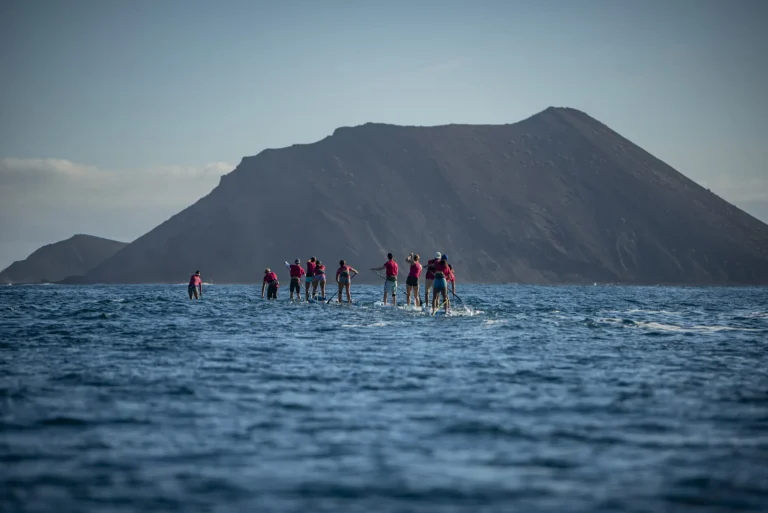
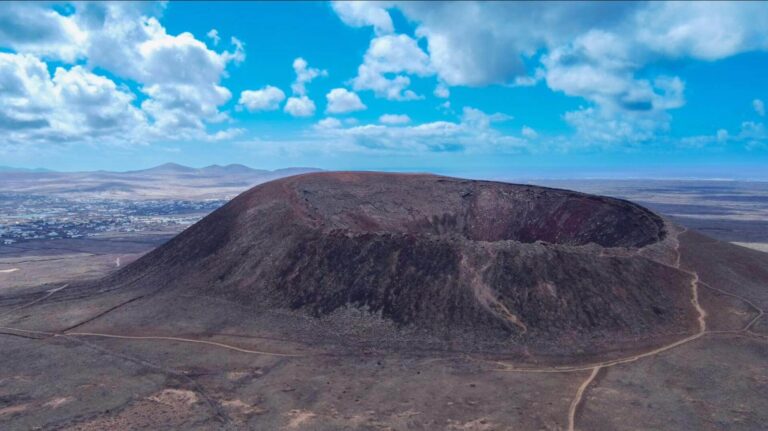
The dunes combine well with the rest of the north in a single day. A few minutes away are the village of Corralejo and its harbour, departure point for boat and catamaran trips; straight across, a fifteen-minute crossing away, is Isla de Lobos; and inland, the crater of Calderón Hondo volcano, one of the easiest and most rewarding walks on the island. If you want to fit it all into one route, we have the guide to what to see in northern Fuerteventura.
Frequently asked questions about the Corralejo Natural Park
How much does it cost to enter the Corralejo Dunes?
Nothing. Access to the natural park is free and unrestricted: no ticket, no checkpoint, no closing time. You don’t pay to park either.
Can you park at the Corralejo Dunes?
Yes, in the unsurfaced lay-bys provided along the edges of the FV-1. What is not allowed is leaving the road to drive or park on the sand: this is a protected area and it carries a fine.
What is the best time of day to visit the dunes?
First thing in the morning or late in the afternoon. Those are the moments of best light for photographing the ridges of sand, and the coolest. Sunset is particularly good because the sun goes down on the sea side.
Are there toilets, beach bars or shade in the park?
Across most of the park, no. There is the odd isolated establishment on the stretch closest to Corralejo, but the rule is that you will find no facilities and no natural shade. Bring water with you from the village.
Can you swim at the beaches in the dunes?
Yes, and the water is glorious, but use your judgement: this is open sea with no lifeguard, with swell and currents that vary a great deal from one day to the next and with the wind. With small children you are better off choosing a sheltered beach.
Are there nudist areas?
On the more remote stretches tucked in among the dunes nudism is entirely normal, as it is along much of Fuerteventura’s wilder coastline. On the busier sections of Grandes Playas most people wear swimwear.
Can you kitesurf or windsurf in the area?
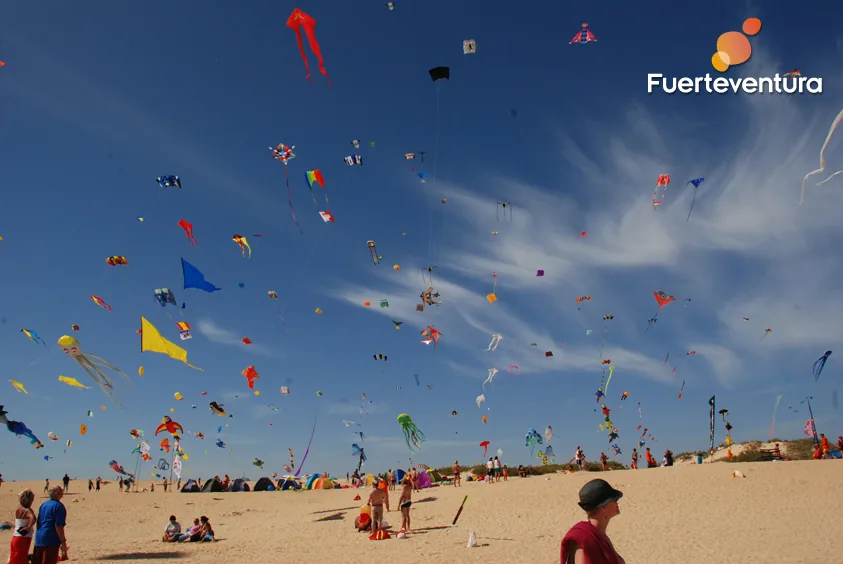
Yes. The steady wind that sculpts the dunes is the same wind that has made the north of the island a leading destination for sailing sports, with schools and launch areas dotted along the Corralejo coast.
How much time should you set aside for the visit?
An hour covers the essentials: park the car, climb the high dunes, take photos and come back down. If you want to reach the shore, have a swim and return at a leisurely pace, allow two or three hours.
Keep exploring