 Español
 English
 Italiano
 Français
 Deutsch


Playa de Jandía: four kilometres of white sand beside Morro Jable
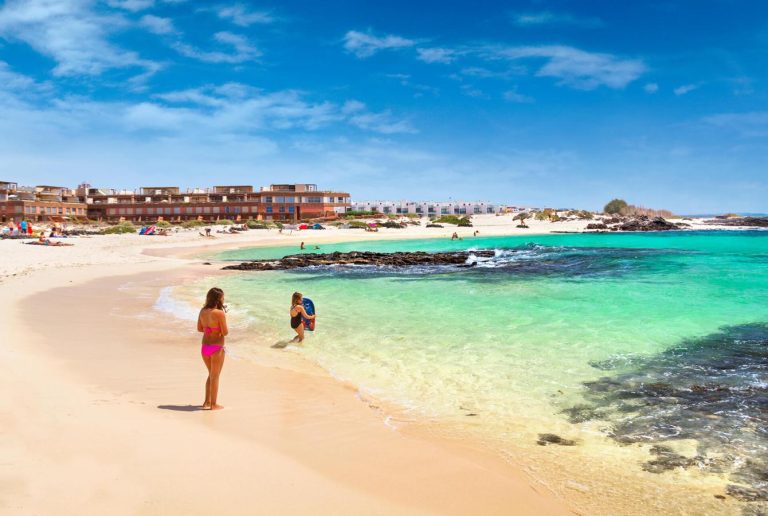
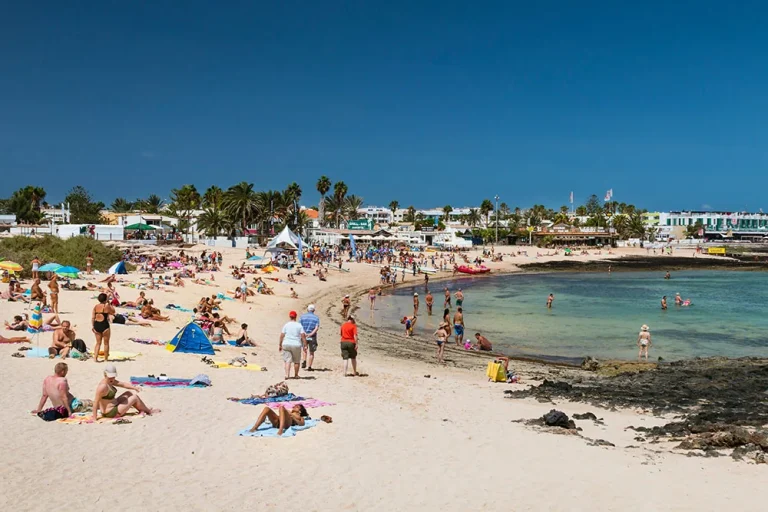
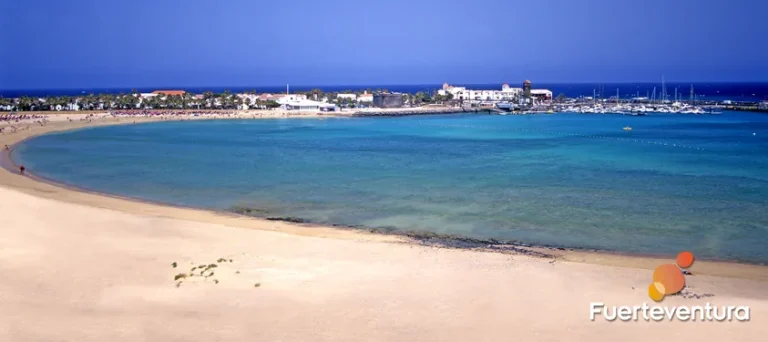
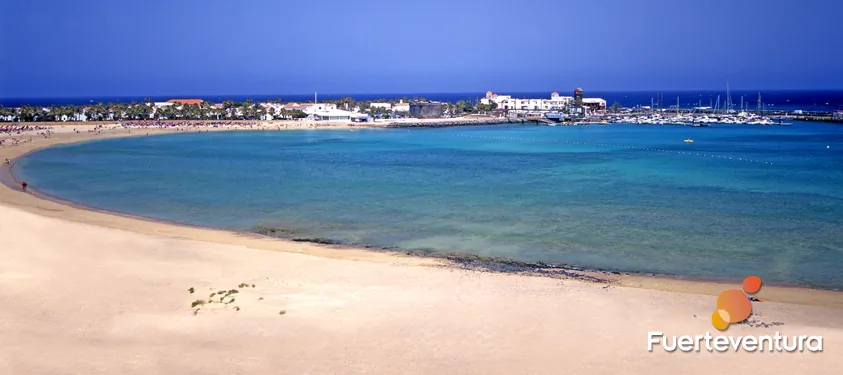
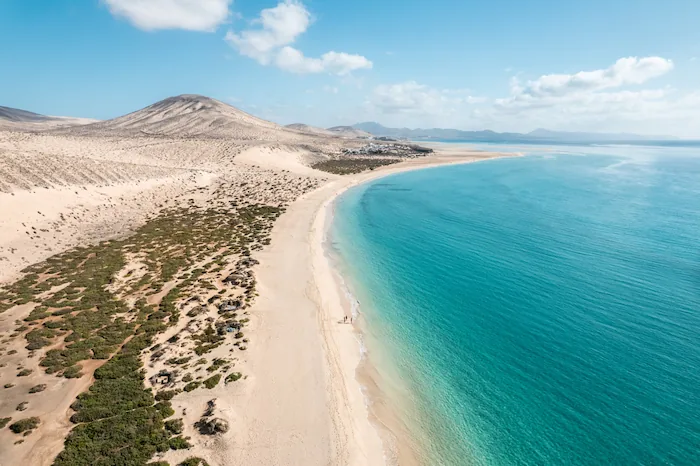
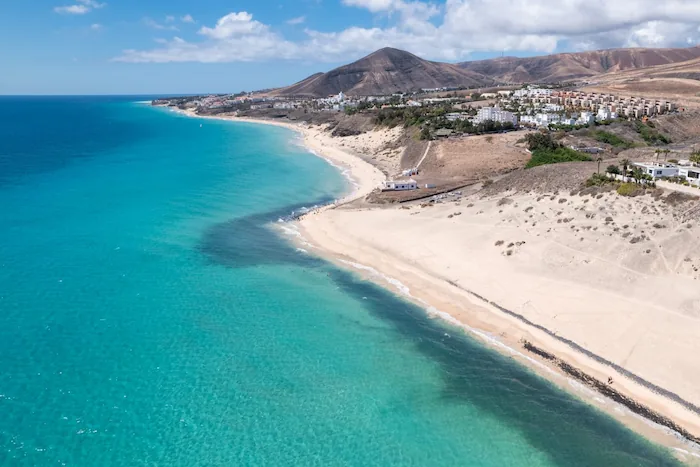
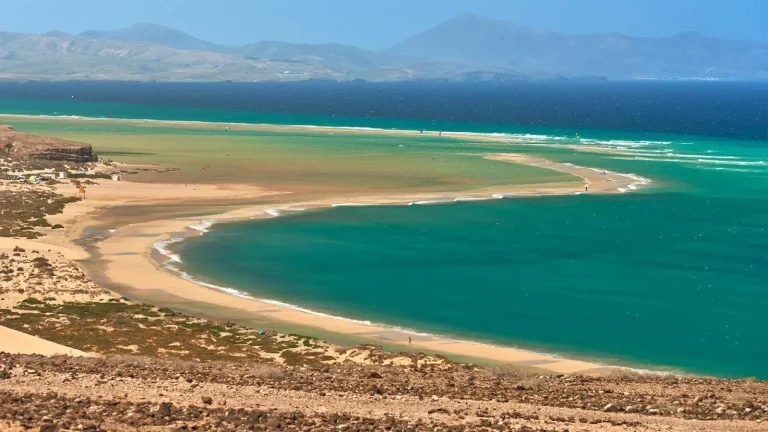
Playa de Jandía is the great beach of Fuerteventura’s far south, right alongside the town of Morro Jable. Several kilometres of fine white sand that widen out to an enormous expanse at low tide, and water of a turquoise that explains a good many of the photos you see of the island.
It is also the most convenient of the big southern beaches: it has a seafront promenade, facilities, restaurants, and you can walk there from town. It is often known as Playa del Matorral as well.
The saltmarsh: the bit almost nobody looks at
Between the beach and the road there is a scruffy-looking strip of land that most people cross without a second glance. This is the Saladar de Jandía, a protected salt marsh and one of the very few ecosystems of its kind left in the Canary Islands.
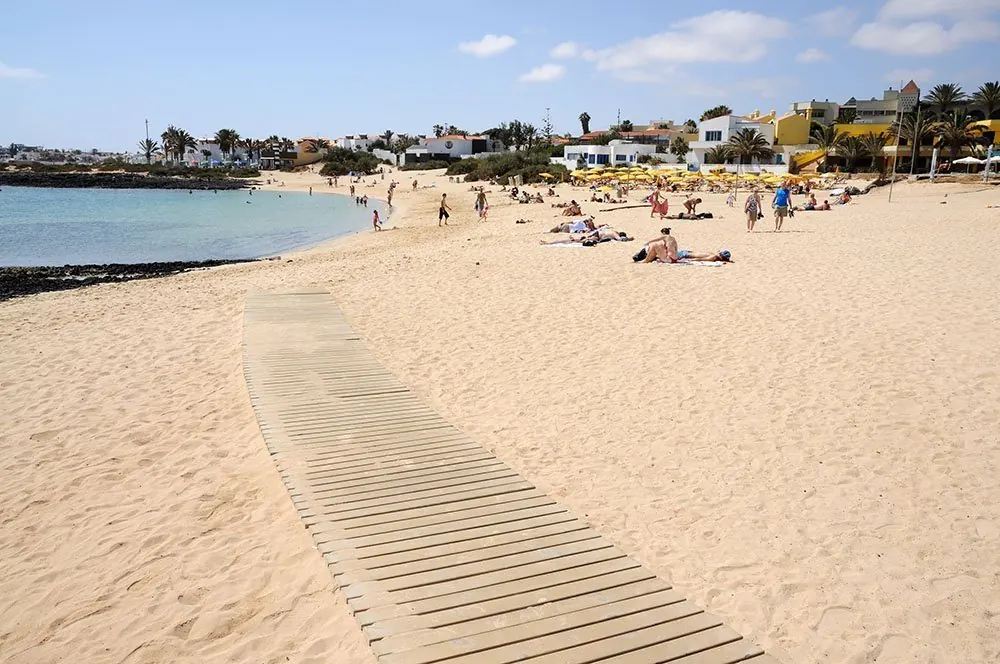
It floods on spring tides, provides a home for migratory birds and is crossed by wooden walkways that are the proper route down to the sand. Walking off them damages the vegetation that holds it all together; it is explained in the rules for protected areas.
At the far end of the beach you will also find the Morro Jable lighthouse, one of the classic places for a stroll at sunset.
What the sand and the water are like
The sand is white, fine and clean, among the most pleasant on the island for walking barefoot. At low tide the beach widens considerably and invites long walks.
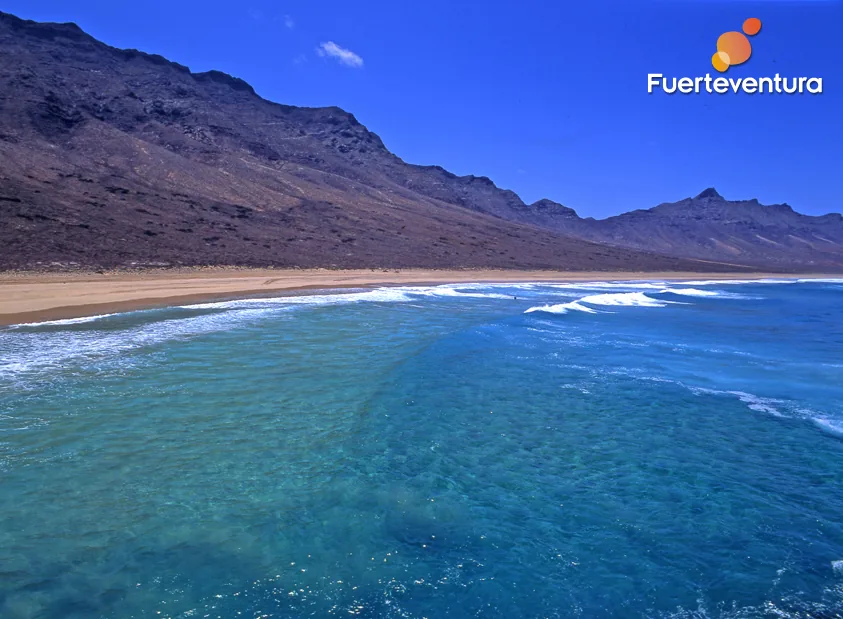
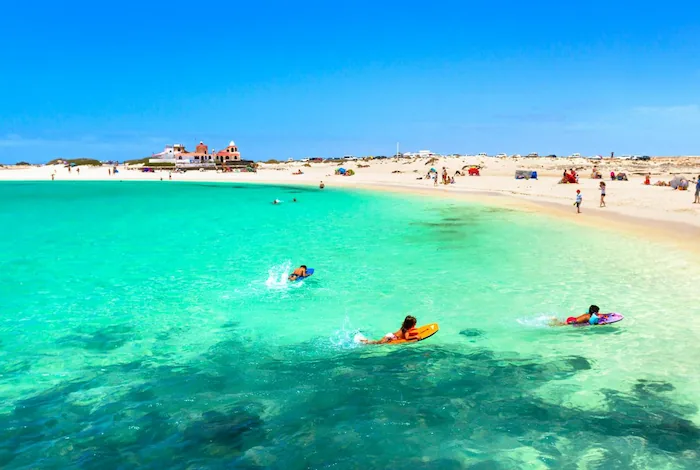
The water deepens gradually and the swell is usually moderate, with plenty of calm areas for swimming. It is not a natural pool like La Concha, but it is a good beach for swimming most of the year, a world away from the danger of Cofete, on the other side of the same massif.
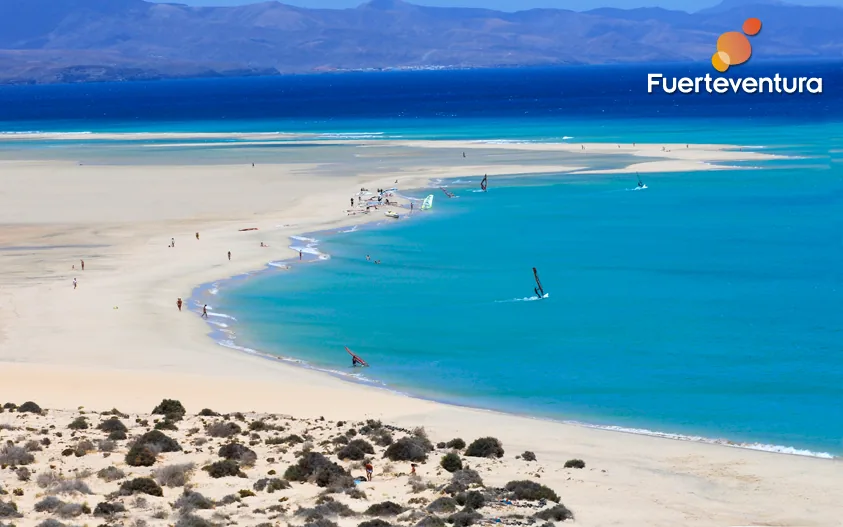
The wind picks up in the afternoon, as it does all over the south, although the orientation of the bay leaves it rather more sheltered than Sotavento.
How to get there and where to park
The beach runs along the edge of Morro Jable, at the end of the FV-2.
you walk. This is the town beach.
about 25 minutes.
around an hour and a half.
a good two hours or more: it is the longest drive on the island.
there is parking around the promenade and at the entrances to the walkways. In high season it is best to arrive early, or leave the car in town and walk.
Facilities
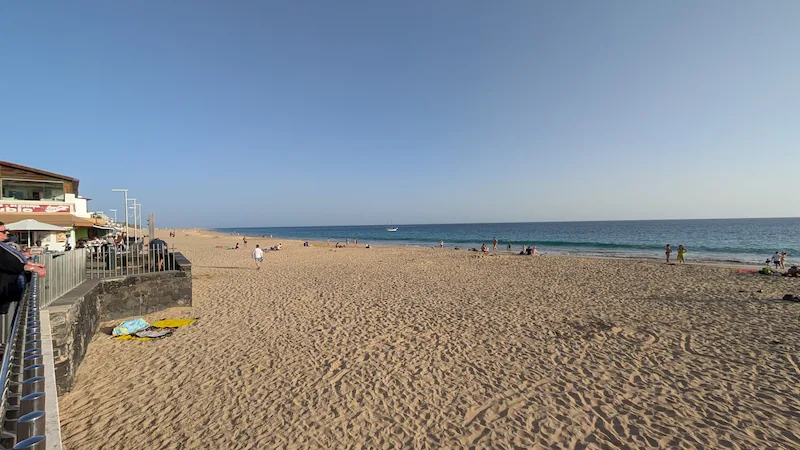
Along the stretch beside the town it is a fully serviced urban beach: promenade, showers, sunbeds and parasols for hire, lifeguards in season and restaurants right on the sand. As you head towards the lighthouse the facilities disappear and the beach empties out considerably.
Nudism is common on the far stretch, towards the lighthouse, while the area by the town is a swimwear beach.
Who it suits
Anyone staying in the south who wants a beach within walking distance, without taking the car.
gentle slope into the water, facilities close by and lifeguards in season.
the combination of walkways, saltmarsh and lighthouse makes for a fine late-afternoon stroll.
Less suitable if you are looking for a deserted beach: for that, head to Cofete on the other side of the peninsula.
What’s nearby
Besides Morro Jable, there is the Sotavento lagoon and Playa de Esquinzo, both back up the FV-2, and the track that crosses the massif to Cofete. The whole south is broken down day by day in our 5-day route.
Frequently asked questions about Playa de Jandía
Are Playa de Jandía and Playa del Matorral the same beach?
Yes. It is the big Morro Jable beach and it goes by both names; the Matorral name comes from the saltmarsh that separates the sand from the road.
Can you swim there?
Yes, it is one of the south’s swimming beaches. The swell is moderate and there are calm areas; in season there are lifeguards along the town stretch.
How do you get there from the airport?
Along the FV-2 heading south, around an hour and a half. You will find all the other transport options in how to get to Fuerteventura.
What is the saltmarsh in front of the beach?
The Saladar de Jandía, a protected salt marsh that floods on spring tides and shelters migratory birds. You cross it on the wooden walkways, without stepping on the vegetation.
Is it good for children?
Yes: fine sand, a gentle slope into the water, facilities at hand and a promenade alongside. The only thing to bear in mind is the afternoon wind.
Is Jandía the same as Sotavento?
No. Both are on the Jandía peninsula and they are often confused, but Jandía is the Morro Jable beach, while Sotavento is the long beach with the lagoon between Costa Calma and Morro Jable.
Are there sunbeds and beach bars?
On the stretch beside the town, yes, along with showers and restaurants. Towards the lighthouse the facilities run out.
Keep exploring