 Español
 English
 Italiano
 Français
 Deutsch


The beaches of Fuerteventura
Wild stretches of sand at the foot of the mountains, lagoons that appear with the tide and coves sheltered from the wind. Every beach on the island is good for something different, and choosing well is half the day.
Swimming in Fuerteventura
The coastline is the island's greatest draw and has it all: kilometres of untouched sand in the south, volcanic-rock coves in the west and town bays in the east. What sets them apart is not beauty but the sea: some are as calm as a pool, others have no lifeguard at all.
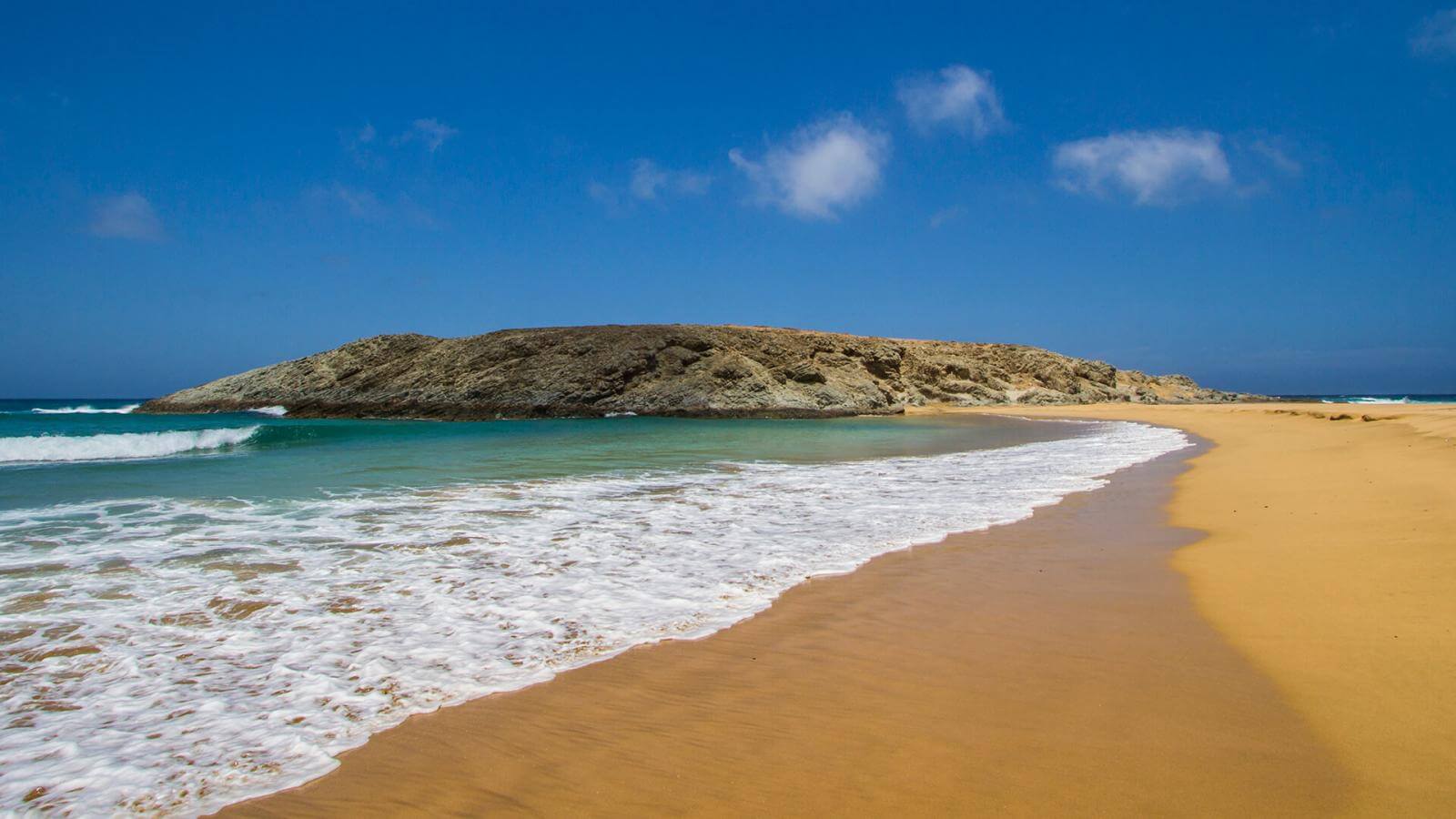 The wildest
Jandía Natural Park
Playa de Cofete: twelve kilometres with nothing around
Twelve kilometres of sand open to the Atlantic, with a wall of mountains over 600 metres high behind it and not a building in sight. It is the most striking landscape on the island.
It is also the most demanding: you reach it along a dirt track of about 20 kilometres, and swimming is dangerous, with currents and no lifeguard.
Full guide to Cofete →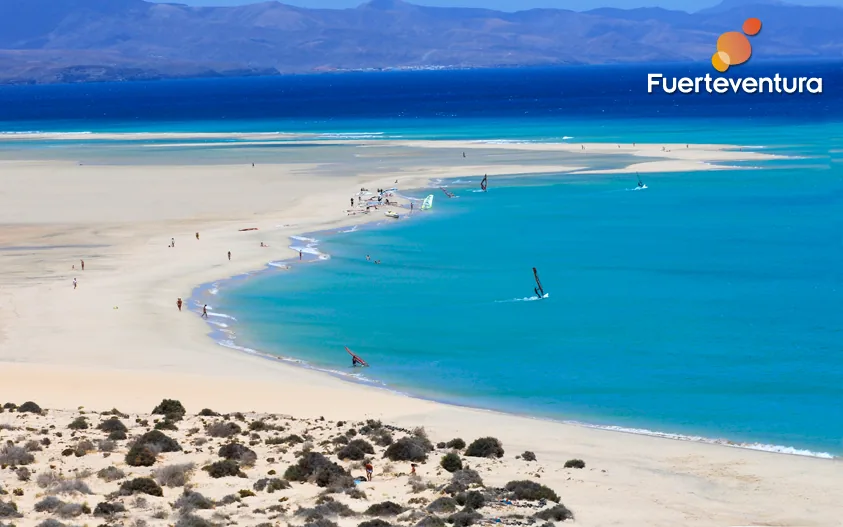 Windsurfing
East coast of Jandía
Playa de Sotavento: the lagoon that comes and goes
Several kilometres of golden sand between Costa Calma and Morro Jable. At low tide a lagoon of calm water forms behind a sandbar, and with its constant wind it is a world reference for windsurfing.
Check the tide table: the lagoon only appears at low tide.
Guide to Sotavento →From north to south
More beaches on the island
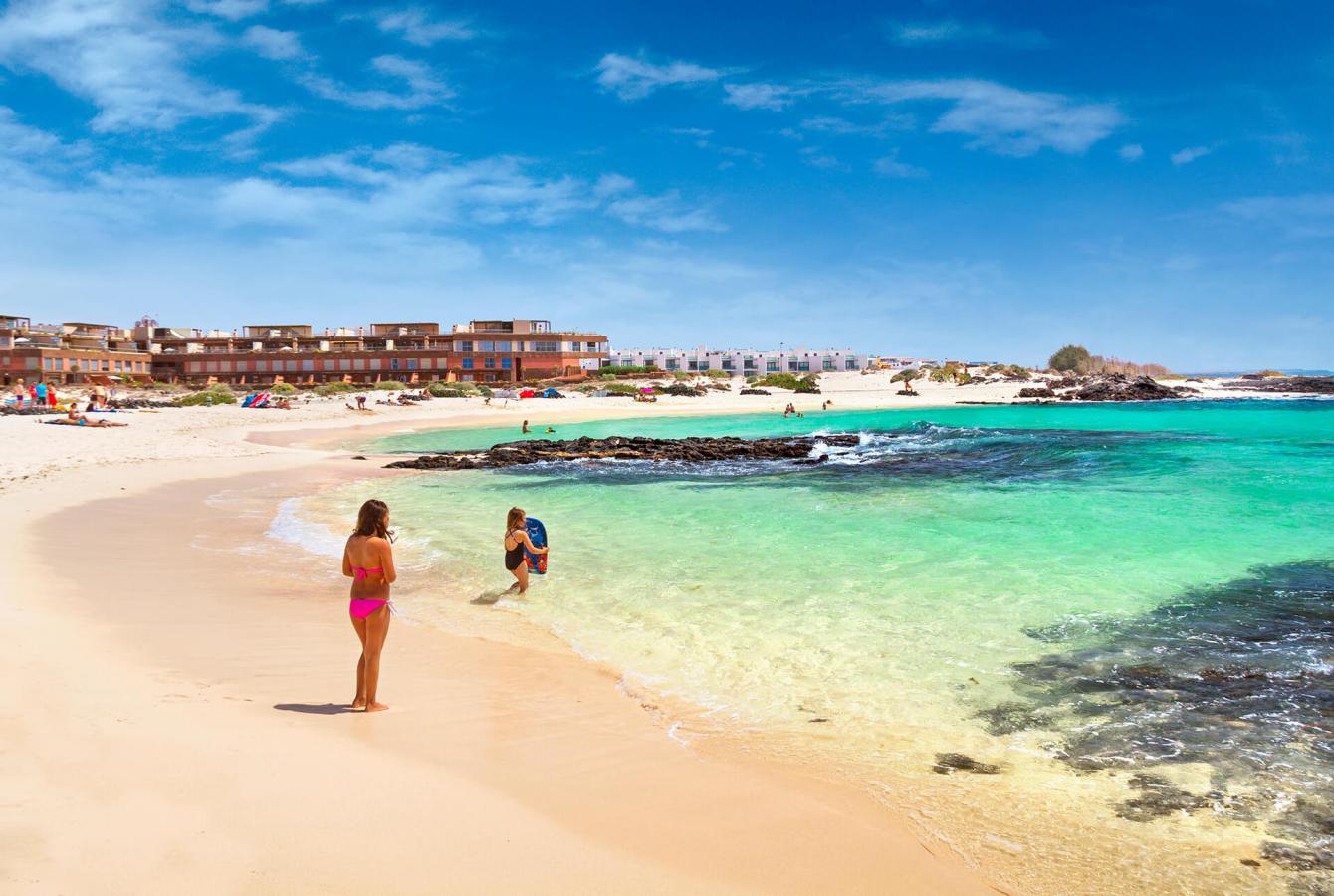 Natural pool
Playa de La Concha
In El Cotillo. A reef of volcanic rock breaks the swell and leaves a calm, shallow lagoon inside.
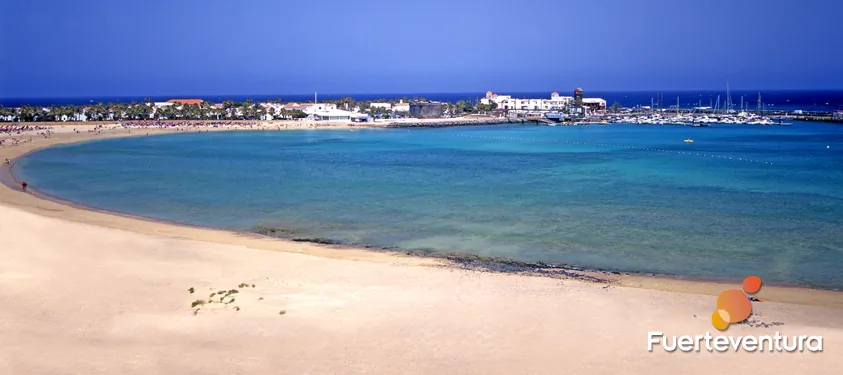 No wind
Playa del Castillo
In Caleta de Fuste. Two breakwaters close the bay and keep the water flat almost every day of the year.
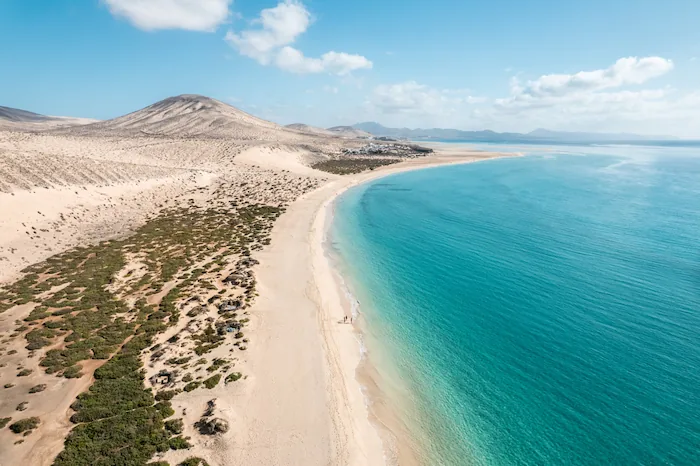 White sand
Playa de Jandía
Next to Morro Jable. Kilometres of fine white sand that grow enormously wide at low tide.
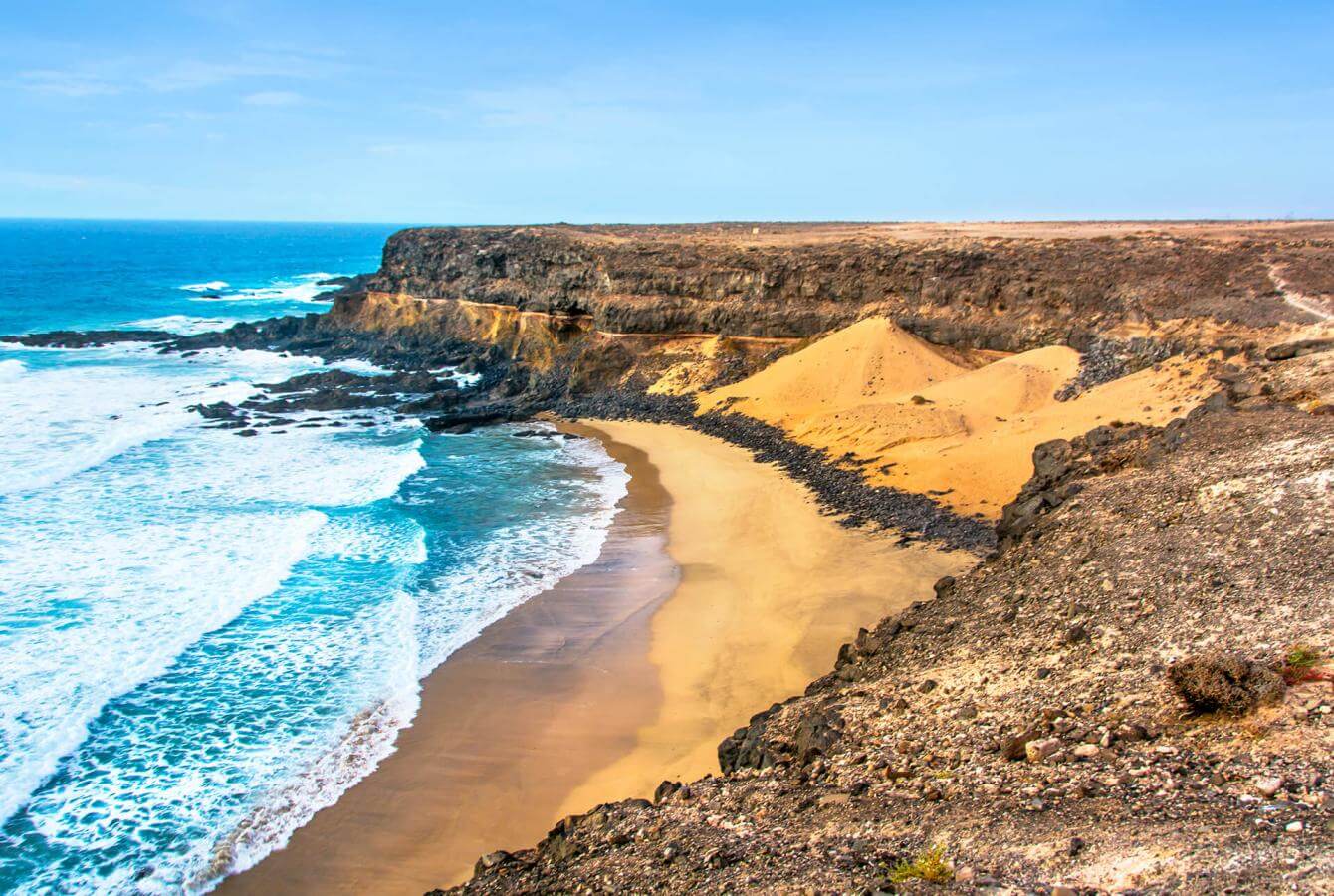 Quiet
Playa de Esquinzo
On the Jandía stretch between Costa Calma and Morro Jable. Wide, golden and much quieter than its neighbours.
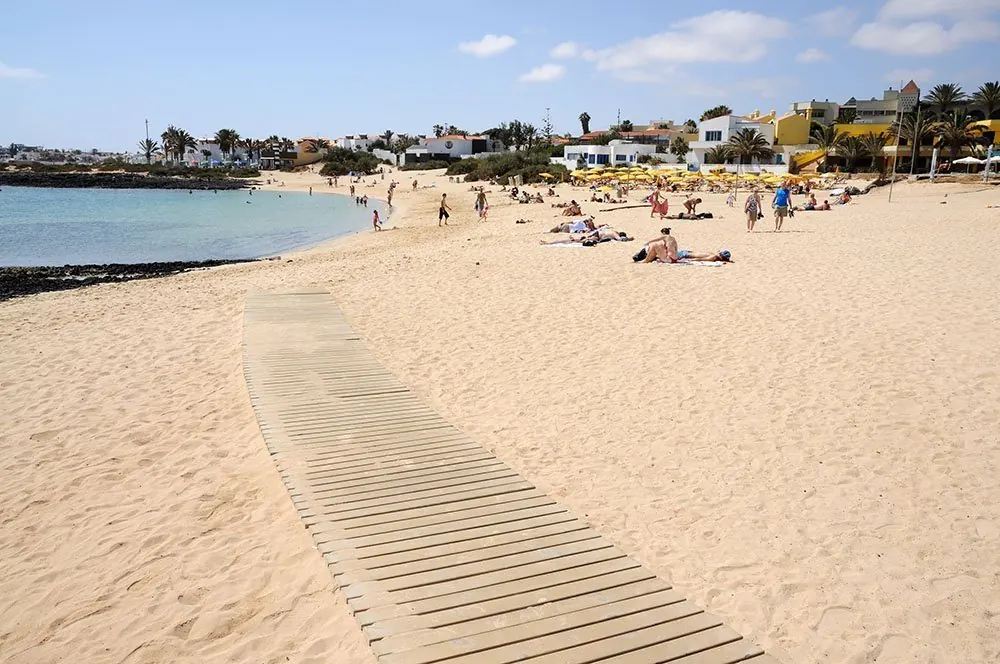 In town
Playa de La Goleta
Right in Corralejo. Fine sand and a gentle slope into the water, with all the town's amenities a step away.
Playa de la Pared
On the west coast, on the Jandía isthmus. Strong swell and currents: a beach for surfing and the best sunsets, not for swimming.
And in the capital, Playa Chica: small, central and sheltered, the town beach of Puerto del Rosario.
Before you go
Tips for the island's beaches
Fuerteventura has beaches for everything, but they are not all good for the same thing. Four things worth knowing before you lay out your towel.
Common questions
Frequently asked questions
Which is the best beach in Fuerteventura?
It depends on what you are after. For scenery, Cofete. For the lagoon and windsurfing, Sotavento. For a calm swim, La Concha in El Cotillo or Playa del Castillo in Caleta de Fuste.
Which beach is best with children?
La Concha in El Cotillo, where a natural reef breaks the swell and keeps the water shallow, and Playa del Castillo in Caleta de Fuste, a bay closed off by breakwaters with flat water almost all year.
Can you swim at Cofete?
It is not advisable: the waves are powerful, there are currents and no lifeguard. Cofete is for walking and taking in the view. And it is reached along a dirt track of about 20 kilometres.
Which beach should you choose on a windy day?
Playa del Castillo in Caleta de Fuste is the island's answer to the wind: the bay is sheltered and it hardly ever blows inside. In the north, La Concha is also protected by its reef.
Where can you surf and windsurf?
Windsurfing has its world reference at Sotavento, thanks to the constant wind. For surfing, the west-coast beaches open to the Atlantic, such as La Pared, and Cofete itself for experienced surfers.
From the sea
See the coast by boat
Catamarans to Isla de Lobos, snorkelling trips and glass-bottom boats from Corralejo and Caleta de Fuste.