 Español
 English
 Italiano
 Français
 Deutsch


What to see in Fuerteventura: the places you cannot miss
Fuerteventura measures a hundred kilometres from north to south and the best of it is spread from one end to the other. That changes how you plan completely: there is no single centre here that everything runs out from, but three quite distinct areas that are best covered separately.
The north is the one with the wind, the dunes and the volcanoes. The centre is the one with the mountains, the old villages and the cliffs of the west coast. The south is the one with the endless beaches and the wildest landscape on the island. This guide runs through all three and links to the page for each place, with how to get there, where to park and how much time to set aside.
If what you are looking for is things to do rather than places to see, you will find them in things to do in Fuerteventura.
What to see in northern Fuerteventura
This is the most visited area and the one that packs the most into the fewest kilometres. If you only have one day, make it this one. There is a fuller guide in what to see in northern Fuerteventura.
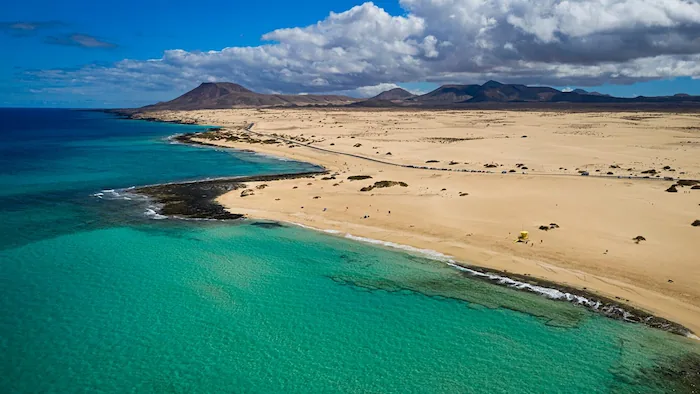 The Corralejo Dunes Natural ParkEight kilometres of white sand dunes facing the sea, crossed by the FV-1 road. The sand does not come from the Sahara: it is organic in origin, made of ground-up shells. Free to visit, with no entry charge.See more →
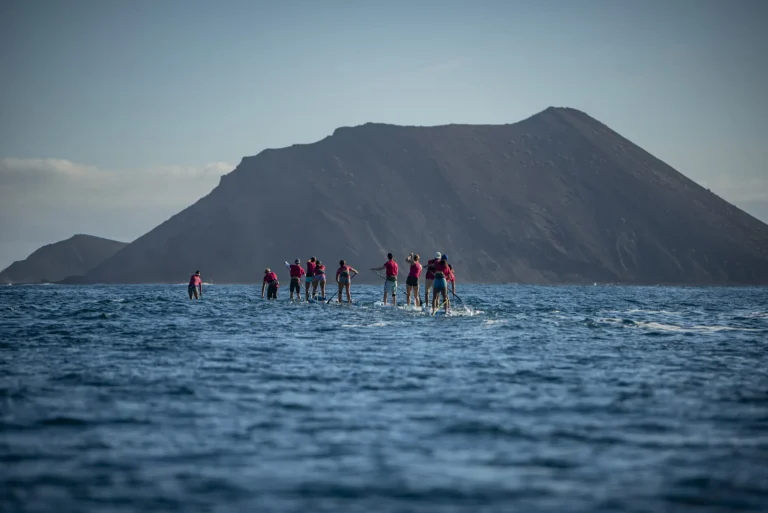 Isla de LobosThe uninhabited islet you can see from Corralejo, fifteen minutes away by boat. Footpaths, a lighthouse, a crater and a turquoise lagoon. To land you need a free permit, and the daily number is capped.See more →
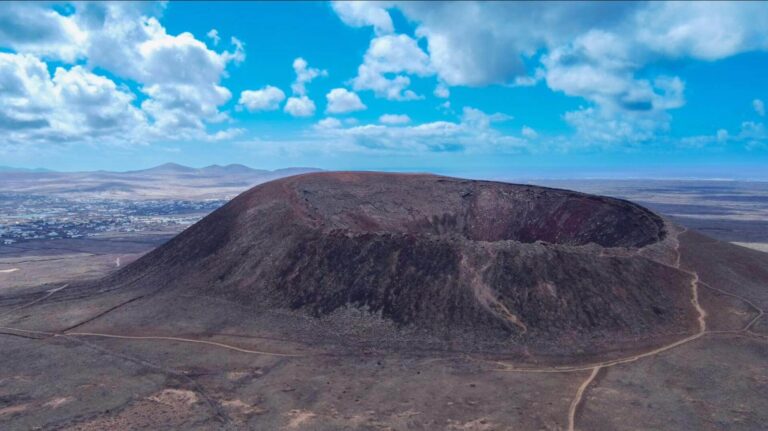 The Calderón Hondo volcanoThe most rewarding walk on the island: an hour and a half from Lajares to look into a circular crater 70 metres deep, with 360-degree views as far as Lanzarote.See more →
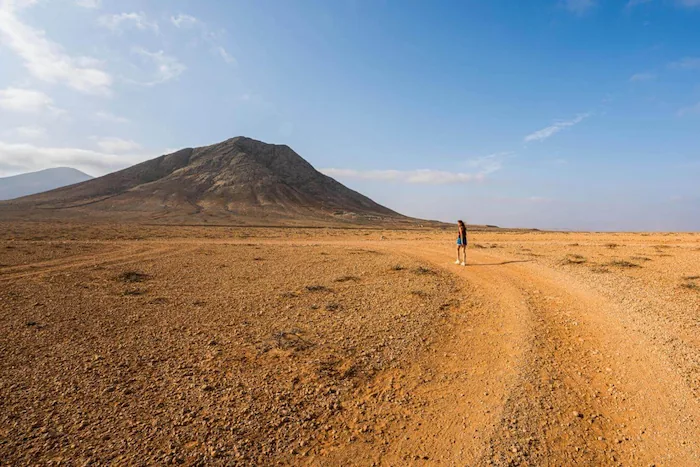 Montaña de TindayaThe sacred mountain of the ancient majoreros, with more than 300 foot-shaped carvings on the summit. You do not climb it – access is restricted to protect them – you walk around it and take it in.See more →
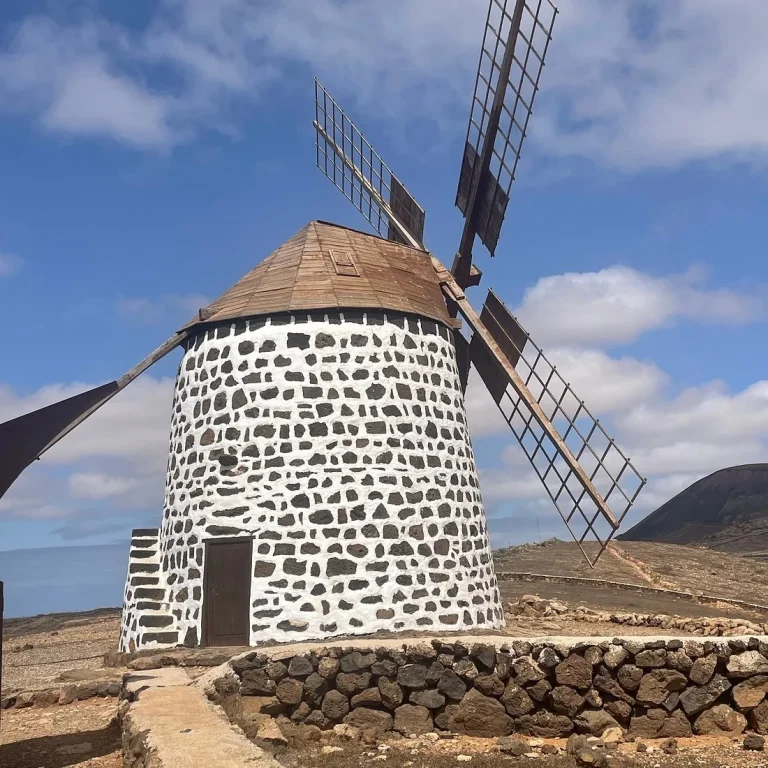 The Villaverde windmillsA short, very photogenic stop between Corralejo and Lajares, with the coast and Lobos in the background.See more →
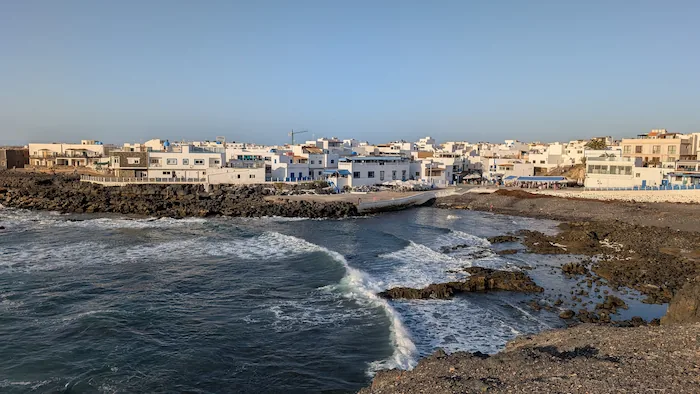 El CotilloA fishing village with turquoise lagoons, a lighthouse and the best sunsets in Fuerteventura.See more →
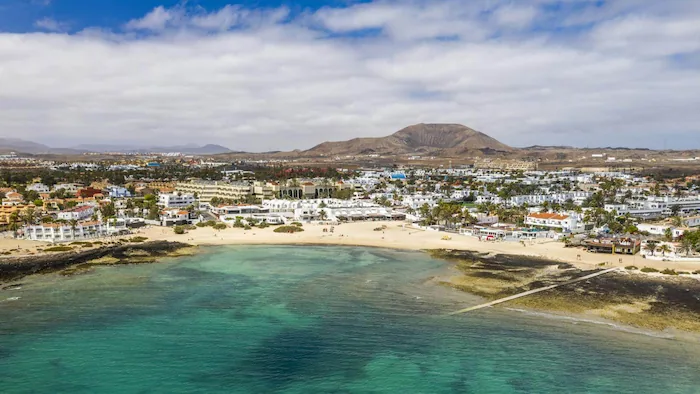 CorralejoThe tourist hub of the north and the port the boats to Lobos leave from.See more →
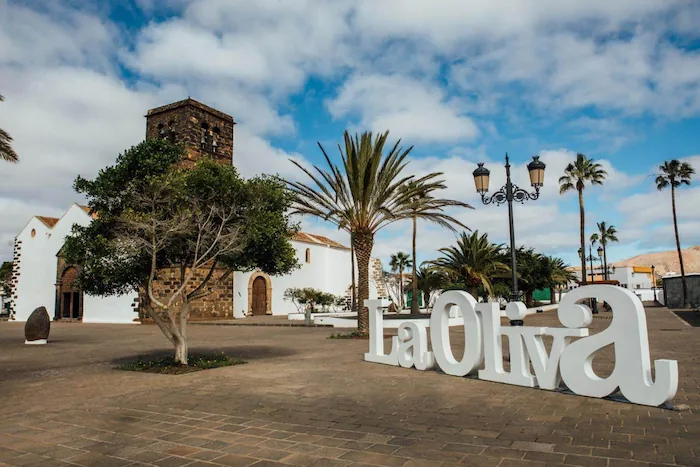 La OlivaThe village with the most history behind it in the north, home to the Casa de los Coroneles.See more →
What to see in the centre of the island
This is the area that surprises people most, because it looks nothing like the postcard image: here there are mountains, valleys that turn green after the rains, and cliffs.
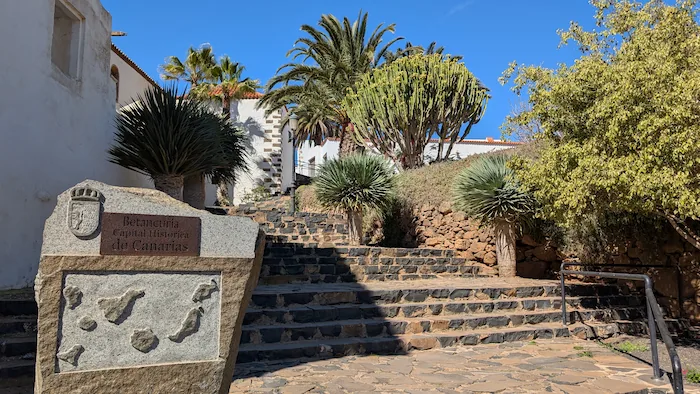 BetancuriaThe island’s first capital, hidden in a valley to protect it from pirates. Cobbled streets, the church of Santa María and the ruins of the convent of San Buenaventura. An hour and a half to visit.See more →
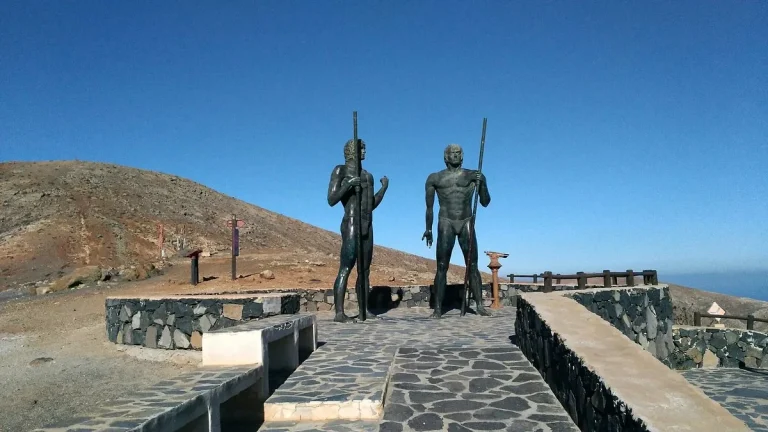 The Mirador de Guise y AyoseTwo four-metre bronze statues of the aboriginal kings who shared the island between them before 1402. A park-and-photograph stop, with the Betancuria valley in front of you.See more →
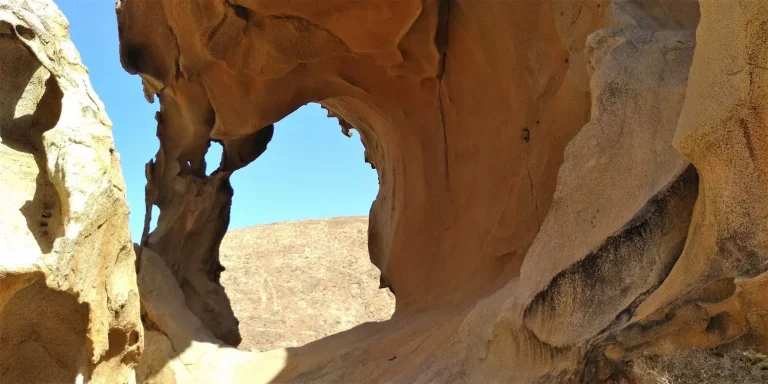 The Arco de las PeñitasA natural rock arch hidden in a ravine, reached from Vega de Río Palmas. It is the most technical route in this guide: there is a little scrambling involved.See more →
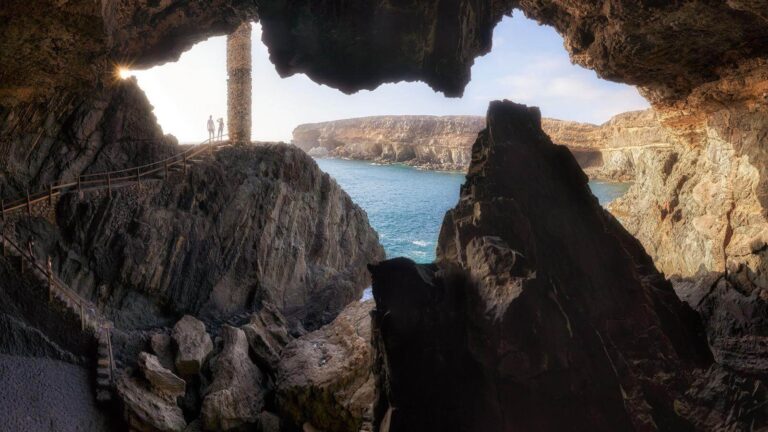 The Ajuy cavesSea caves opened up in the oldest rocks in the Canaries, at the end of a path along the cliff top and with a black sand beach as the starting point.See more →Puerto del RosarioPuerto del RosarioThe capital, with more than a hundred open-air sculptures and the Casa Museo Unamuno, where the writer lived out his exile in 1924.See more →
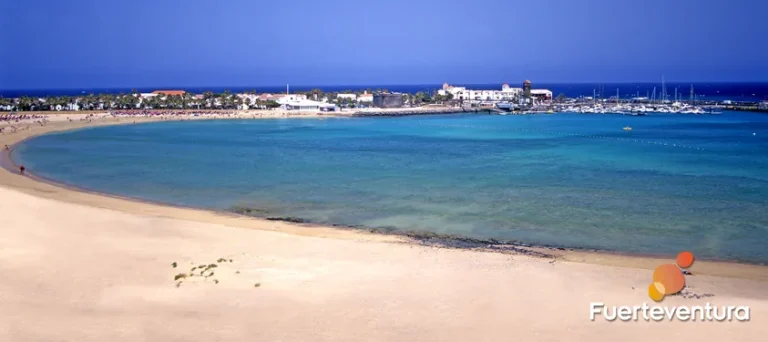 Caleta de FusteThe windless bay of the east coast, with its eighteenth-century castle and the harbour almost every boat trip on the island leaves from.See more →
What to see in the south and on the Jandía peninsula
The south is the one with the long distances and the most open landscape. It is worth giving it a whole day and setting off early.
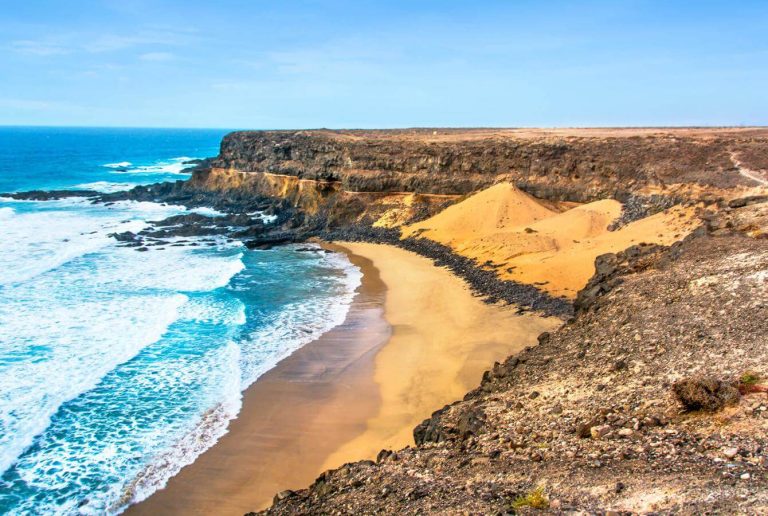
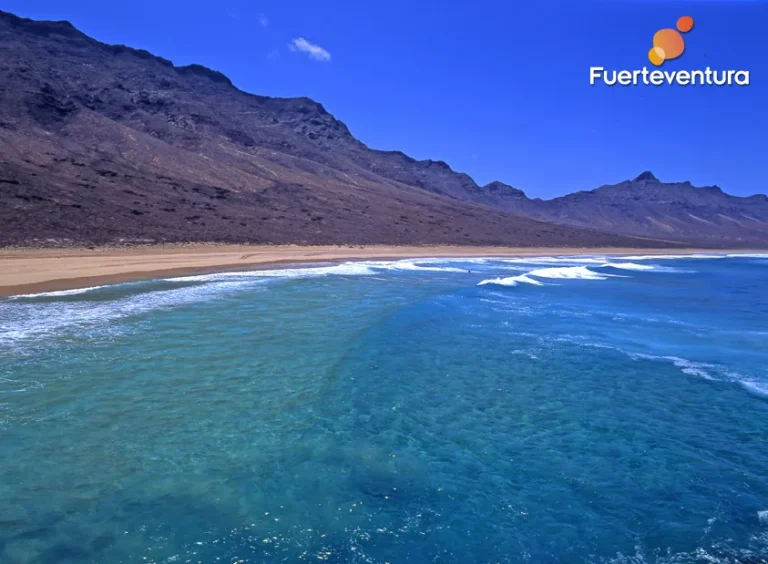 Playa de CofeteTwelve kilometres of wild sand on the far side of the Jandía massif, without a single building in sight. The sea is dangerous, but there is nothing to compare with the place anywhere in the Canaries.See more →
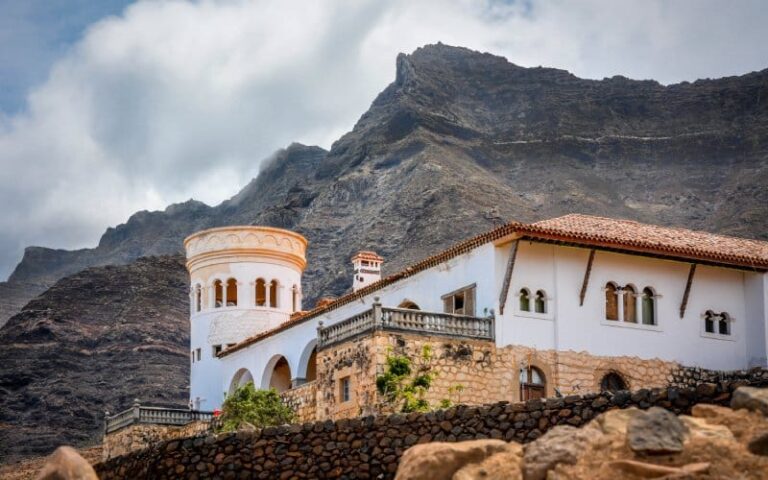 La Casa WinterThe isolated mansion above Cofete that has fed every legend on the island.See more →
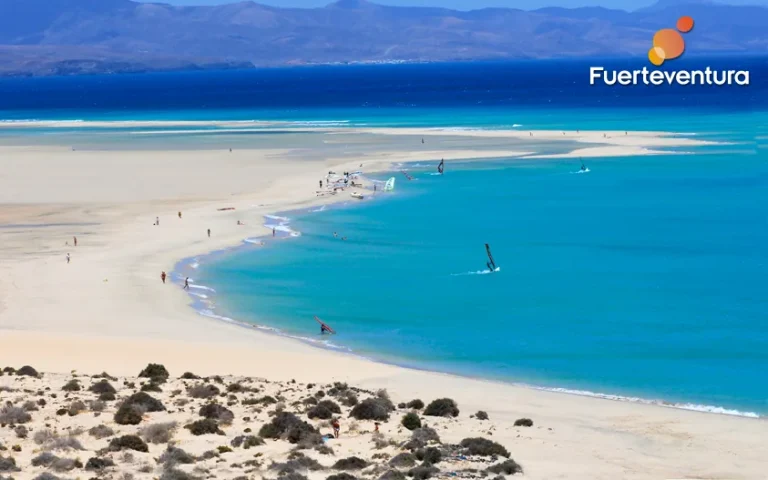
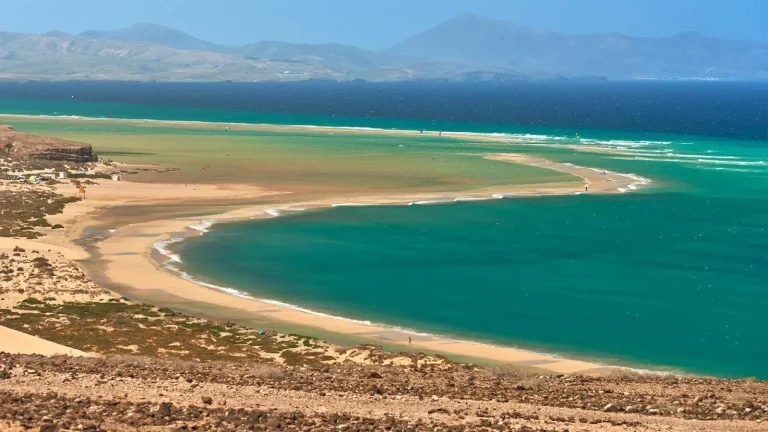 Playa de SotaventoThe lagoon that forms at low tide and the setting for the world windsurfing and kitesurfing championships.See more →
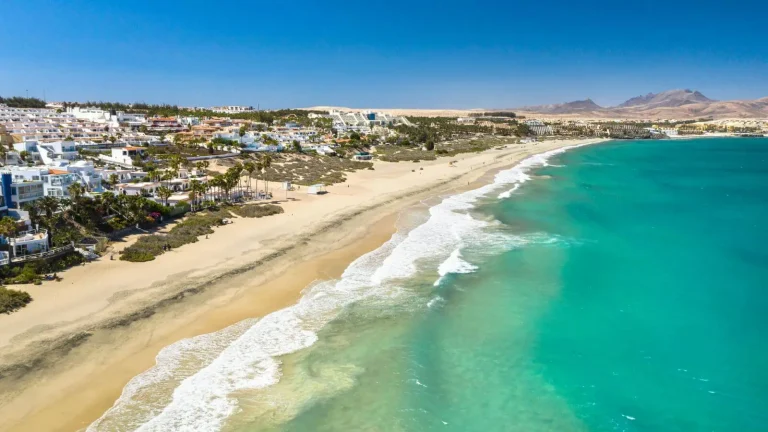 Playa de JandíaKilometres of pale sand and turquoise water at the southern tip.See more →
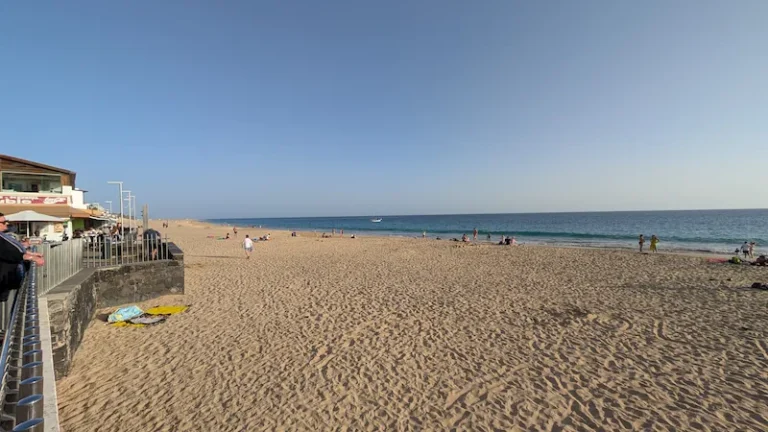 Morro JableThe main town of the south, with its lighthouse and its harbour.See more →
The beaches you cannot miss
On an island with more than 150 beaches, these are the ones worth a detour. You have them all, with the type of sand, the surf and the access for each, in beaches of Fuerteventura.
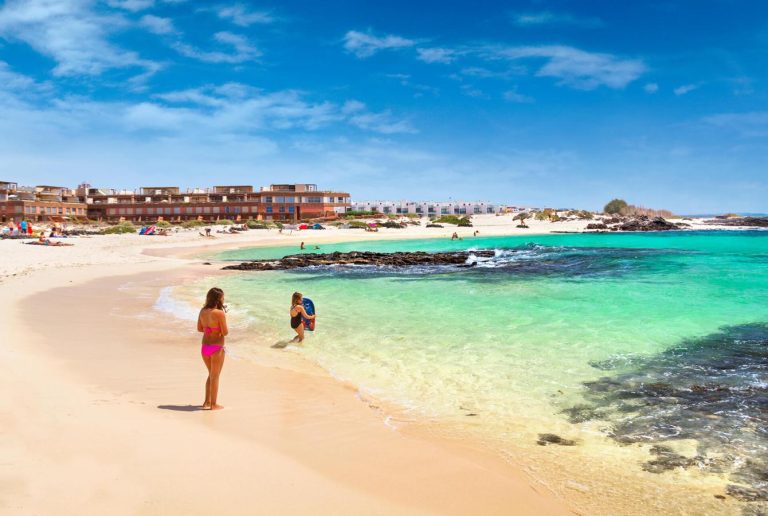
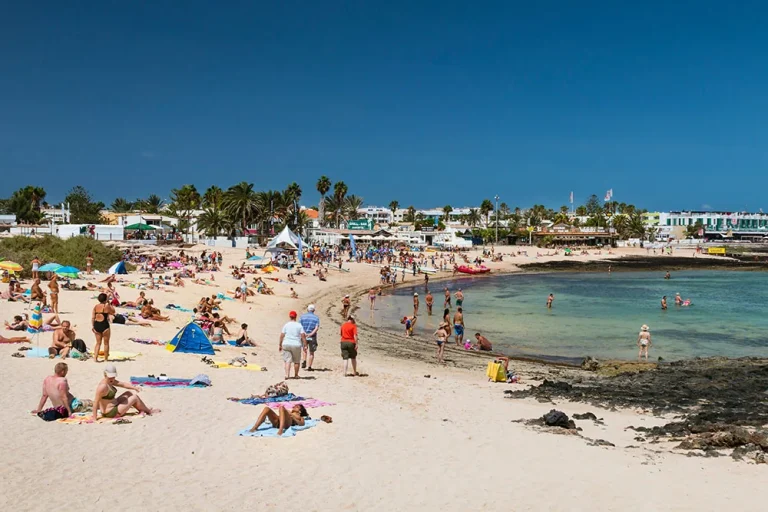
La Concha, in El Cotillo, and Playa del Castillo, in Caleta de Fuste. Both have sheltered water and no currents.
How many days you need
the north. The Corralejo Dunes, El Cotillo and, if there is time, Calderón Hondo.
the north, a full day on Lobos and a day inland taking in Betancuria and Ajuy.
all of the above plus the south and Jandía. That is the right length to see the island without rushing, and it is planned out day by day in our 5-day route around Fuerteventura.
add Cofete, the Arco de las Peñitas and a few beach days with no plan at all.
How to get around to see it all
Honestly: to see Fuerteventura you need a car. The bus network links the larger towns well through Puerto del Rosario, but most of the viewpoints, beaches and footpaths on this page are a long way from a stop.
If you are not going to hire a car, the real alternative is an organised excursion: there are two road tours that cross the island from coast to coast with a guide and transport included.
And before you set off, read up on the rules for protected areas: a good part of what appears here is protected.
Frequently asked questions
What is the most beautiful part of Fuerteventura?
It depends what you are after, but there are three places almost nobody argues about: the Corralejo Dunes, Playa de Cofete and Isla de Lobos. If you would rather have a village and some history, the answer is Betancuria.
What can you see in Fuerteventura in one day?
The north. The Corralejo Dunes in the morning, lunch in El Cotillo and sunset over its lagoons in the evening. If you are an early riser, the climb up Calderón Hondo fits in too.
Is it worth going to Cofete?
Yes, as long as you know what you are going for: it is a lot of kilometres, part of it on a dirt track, and the swimming is dangerous. What you go to see is the landscape, and there is nothing else like it in the Canaries.
Do you need a permit to visit Isla de Lobos?
Yes, to land: it is free, the Cabildo issues it and the daily number is capped, so it is worth asking for it in advance. Sailing past the island on a boat trip needs no paperwork at all.
Can you see Fuerteventura without a car?
Partly. The larger towns are connected by bus, but most of the places in this guide are not. The practical answer is to hire a car, or to combine a central base with organised excursions.
When is the best time to visit the island?
Any time: the temperature varies little through the year. What does change is the wind, stronger in summer, and the crowds, far bigger at Easter and in August. You have the rest of the practical detail in the Fuerteventura travel guide.
How do you get to the island?
By air to Fuerteventura airport, next to Puerto del Rosario, or by ferry from the neighbouring islands. We explain it in how to get to Fuerteventura.