 Español
 English
 Italiano
 Français
 Deutsch


Tindaya mountain: the sacred mountain of the ancient majoreros
Some mountains are for climbing and some are for looking at. Tindaya mountain, in the north of Fuerteventura, belongs firmly to the second group, and not on a whim: it is a protected natural area holding one of the most important archaeological sites in the Canaries, and its summit is off limits precisely in order to preserve it.
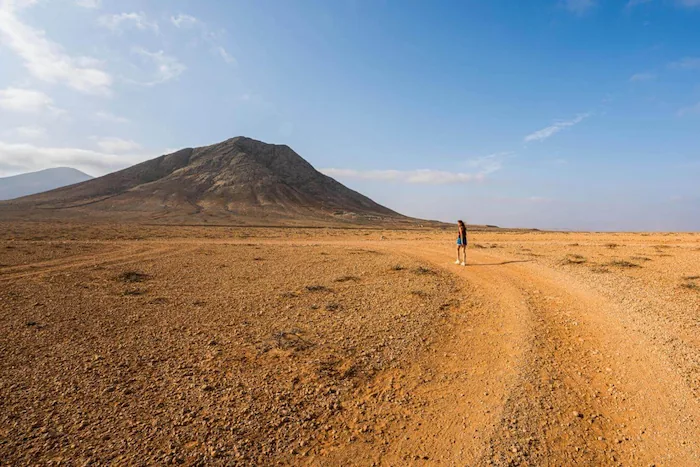
Its almost pyramidal silhouette stands alone on a bare plain, and the rock — pale-toned trachyte — changes colour through the day until it turns pink at sunset. For the mahos, the people who lived on the island before the conquest, this was a sacred place. What they left at the top explains why.
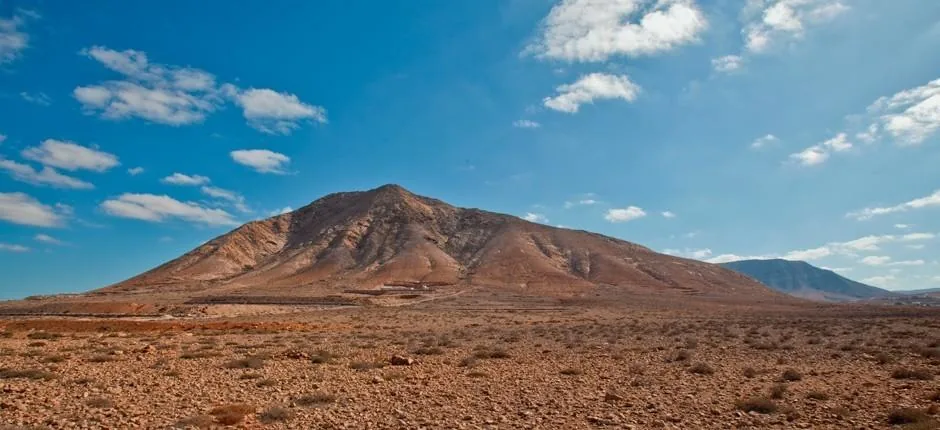
The podomorphs: more than 300 feet carved into the rock
On the summit there are more than 300 carvings in the shape of a foot, known as podomorphs, cut into the rock. It is one of the largest collections of its kind anywhere in the world.
And here is the detail that makes it more than a curiosity: they are not placed at random. Most of them face towards Teide, on Tenerife, or towards Gran Canaria and Lanzarote. In other words, they point to the other sacred places of the archipelago, which suggests that Tindaya worked as a high sanctuary, a site for ritual and observation rather than a settlement.
That is also why you cannot simply walk up: constant footfall wears the carvings away. If this part of the island’s story interests you, the Archaeological Museum in Betancuria is the natural companion to this visit.
The project that was never built
Tindaya also has a contemporary chapter that many people know nothing about. In the 1990s there was a plan to hollow out the inside of the mountain to house a monument: a great chamber carved into the rock, the work of the sculptor Eduardo Chillida, with two openings to the sky so that you could see the sun and the moon from within.
The project set off one of the biggest controversies in recent Canarian history — archaeological and environmental value against a cultural project — and it was never carried out. The mountain stands exactly as it was, and that argument is part of what Tindaya means today.
How to get there and what you can do
The starting point is the village of Tindaya, in the municipality of La Oliva, with parking in and around the square.
about 25 minutes.
around 20 minutes.
about 20 minutes.
What you can do, and what we would recommend:
See it from the village viewpoint. This is the classic view of the whole silhouette, and the one that best shows off the pyramid profile.
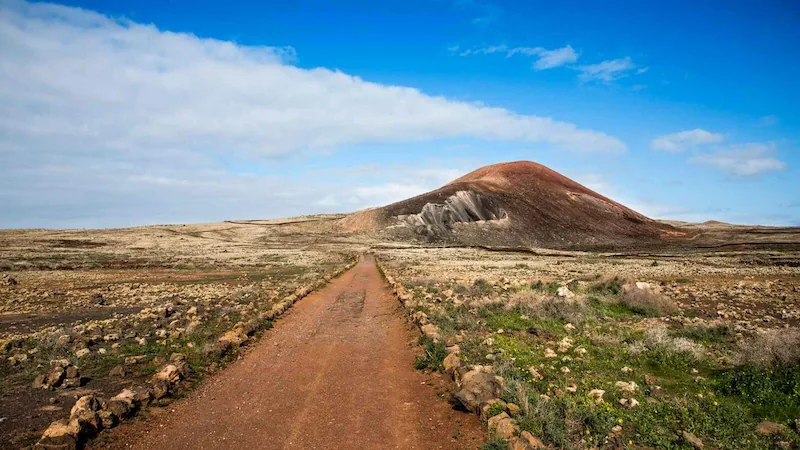
Walk the paths around the base. There is a comfortable perimeter route that goes all the way round at the bottom. 30 to 45 minutes is enough for the walk and a proper look.
What you cannot do: climb to the summit. The ascent is restricted in order to protect the aboriginal carvings. This is not a recommendation: it is the rule of the protected area, and you can go over the rules for protected areas in Fuerteventura.
When to go: at sunset
If you can only go once, go late in the afternoon. Tindaya’s trachyte responds to low light and shifts from pale grey to ochre and then pink, while the plain around it falls silent. It is the moment when you understand, without needing anything explained, why the ancient majoreros chose this mountain.
Take a light layer with you: the area is open and windy, and once the sun drops it cools off fast.
What to see near Tindaya
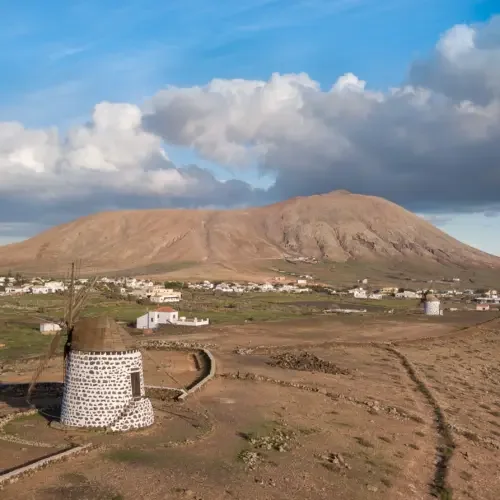
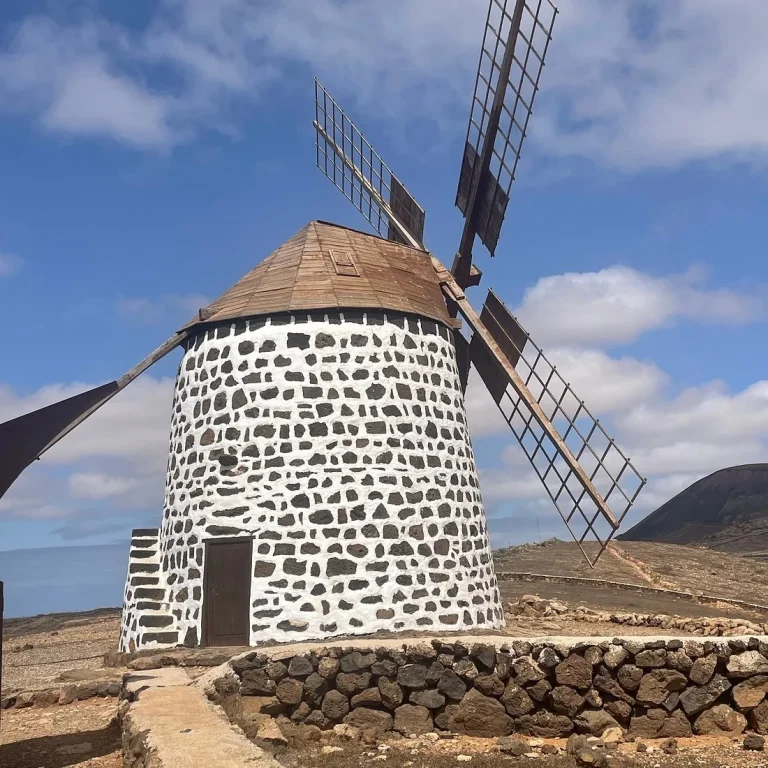
Tindaya falls on the way in any route through the north. A few minutes away are La Oliva, with the Casa de los Coroneles, and the Villaverde windmills; a little further on, Calderón Hondo volcano from Lajares and El Cotillo. The recommended order is in what to see in northern Fuerteventura.
Frequently asked questions about Tindaya mountain
Can you climb Tindaya mountain?
No. The ascent to the summit is restricted in order to protect the more than 300 podomorph carvings. What you can do is follow the paths around the base and take it in from the village viewpoint.
What are the Tindaya podomorphs?
Foot-shaped carvings cut into the rock of the summit by the island’s ancient inhabitants. There are more than three hundred of them and most are oriented towards Teide or towards Gran Canaria and Lanzarote, which points to a ritual use.
How much does the visit cost?
It is free and unrestricted. There is no ticket, no ticket office and no opening hours: you visit the surroundings of the mountain from outside.
How much time do you need?
Between 30 and 45 minutes for the walk around the base and a good look. If you are only going to see it and photograph it from the viewpoint, fifteen minutes will do.
Why is it called the “sacred mountain”?
Because it was sacred to the mahos, the aboriginal people of Fuerteventura. They did not live on it: they climbed it to perform rituals. The carvings on the summit and the way they are oriented towards the other islands are the evidence that has come down to us.
Is it true that they wanted to hollow the mountain out?
Yes. In the 1990s there was a plan to excavate a great chamber inside it for a monument by Eduardo Chillida. The controversy was enormous and the project was never built.
Is the visit suitable for children or a pushchair?
The walk around the base is flat and short, so it works well with children. With a pushchair the unsurfaced ground is awkward but passable on the stretches near the village.
What is the mountain made of?
Of trachyte, a pale-toned volcanic rock that is uncommon on the island. That is what gives it its shifting colour in the light and a profile so different from the basalt cones of the north.
Keep exploring