 Español
 English
 Italiano
 Français
 Deutsch


Playa de Sotavento: the lagoon that appears and disappears with the tide
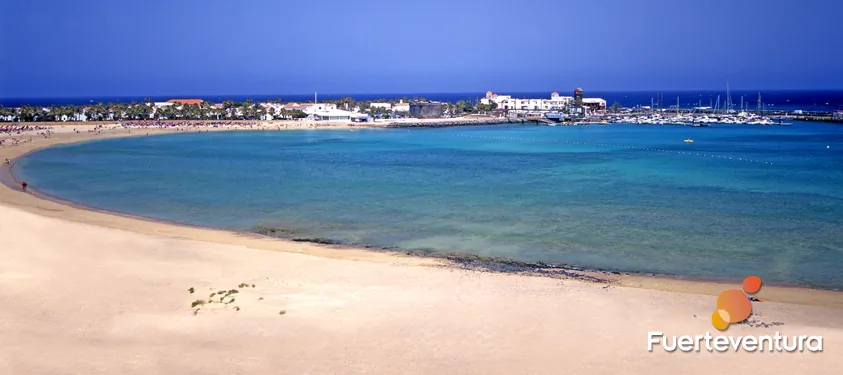
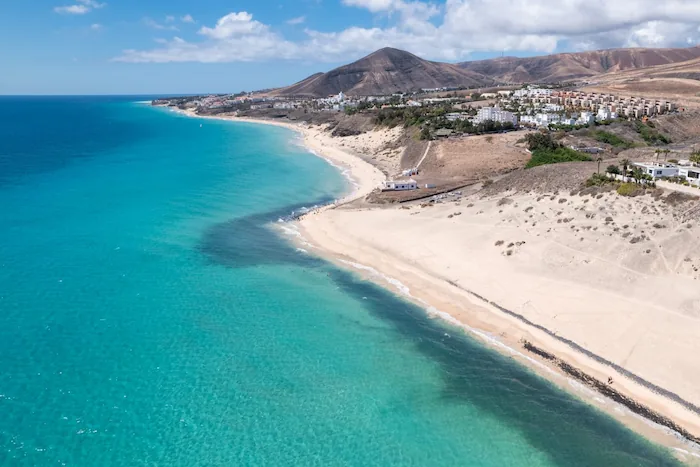
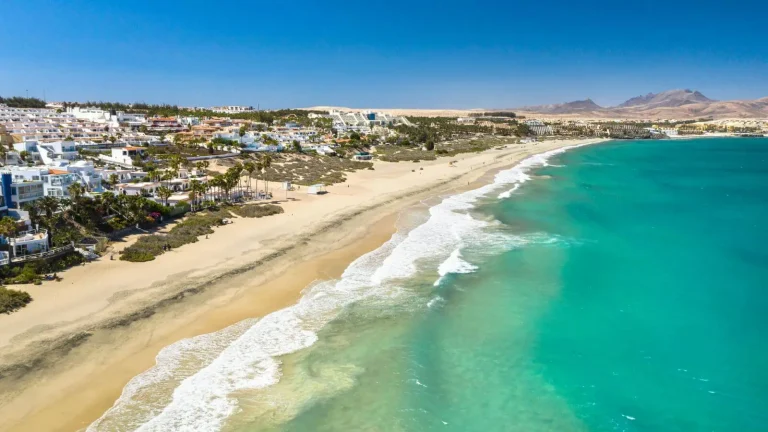
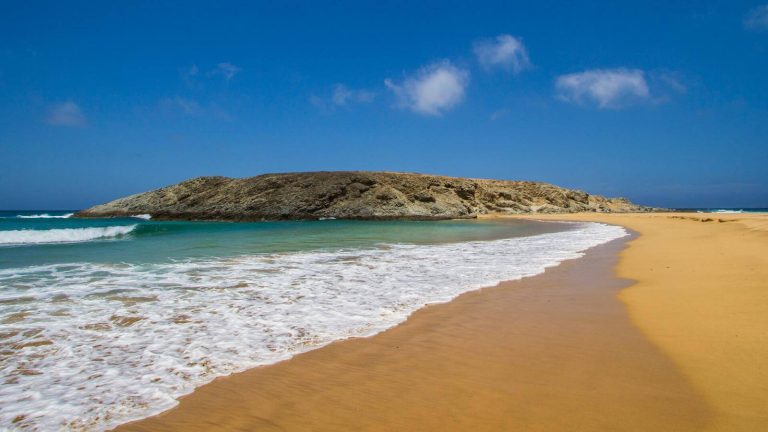
Playa de Sotavento runs for several kilometres along the east coast of the Jandía peninsula, between Costa Calma and Morro Jable, inside the Jandía Natural Park. It is the most photographed beach in the south of Fuerteventura and the one that has given the island its worldwide reputation in wind sports.
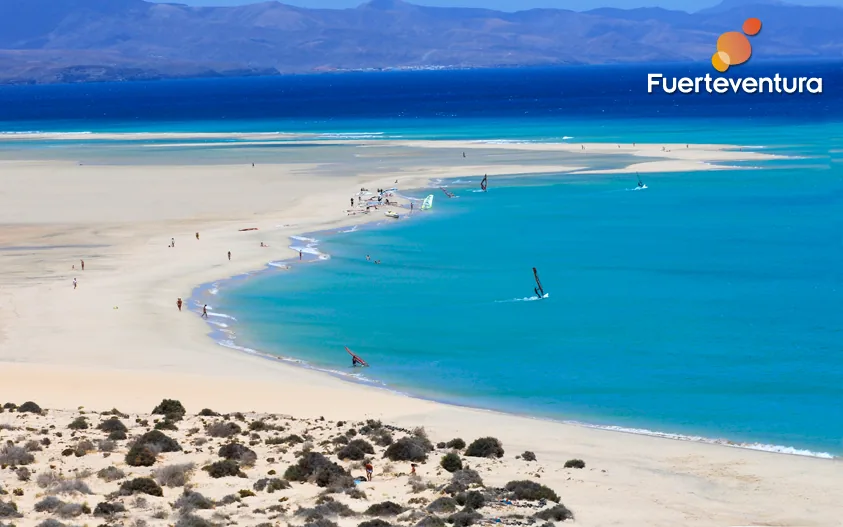
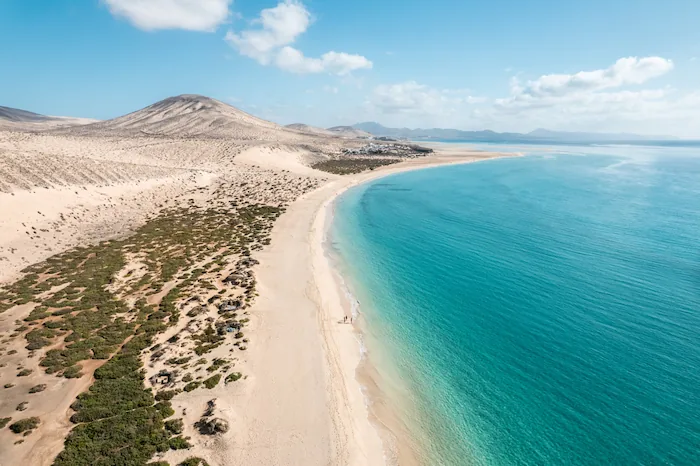
What makes it unique is something you will not see on any other beach in the Canaries: as the tide drops, a spit of sand peels away from the coast and encloses a shallow turquoise lagoon you can wade straight across. When the tide comes back in, the lagoon vanishes. Arriving at the right moment changes the visit completely.
The lagoon: when it forms and how to make the most of it
The lagoon forms in the stretch known as Risco del Paso, and it depends entirely on the day’s tide cycle.
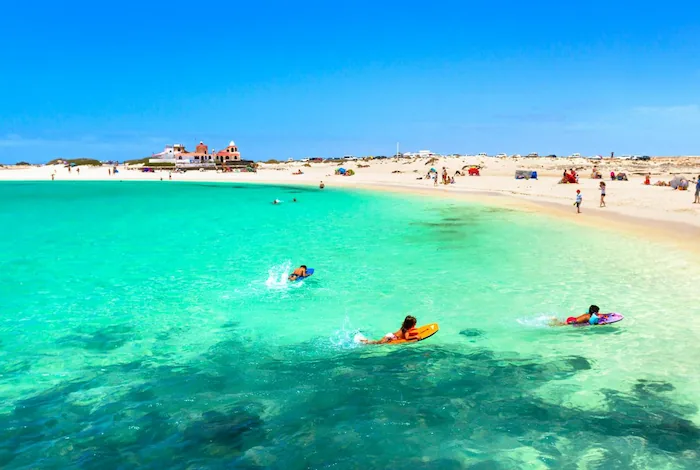
At low tide what is left is an enormous pool of warm, transparent water that barely covers you, cut off from the open sea by a sandbank. This is the moment for the photograph, for swimming with children and for windsurfing and kitesurfing lessons.
At high tide the lagoon merges back into the sea and the beach becomes an ordinary, far narrower strip of sand.
Which is why the most useful piece of advice on this whole page is also the simplest: check the day’s tide table before you set off and plan your visit around low water.
The wind, which here is an attraction in itself
Sotavento regularly hosts international windsurfing and kitesurfing championships, and that is no accident: the combination of steady wind, flat water in the lagoon and space to spare is hard to find anywhere else.
The practical consequence, if you have only come to lie down: it blows here, and hard, especially in the afternoon and in summer. It is a magnificent beach for being in the water or for walking, and a less comfortable one for spending six hours on a towel.
If you fancy giving it a go, the area is full of schools for every level; you will find the details in the complete guide to windsurfing in Fuerteventura. And if what you are after is exactly the opposite — still water and no wind — you have it at Playa del Castillo, in Caleta de Fuste.
What the sand and the water are like
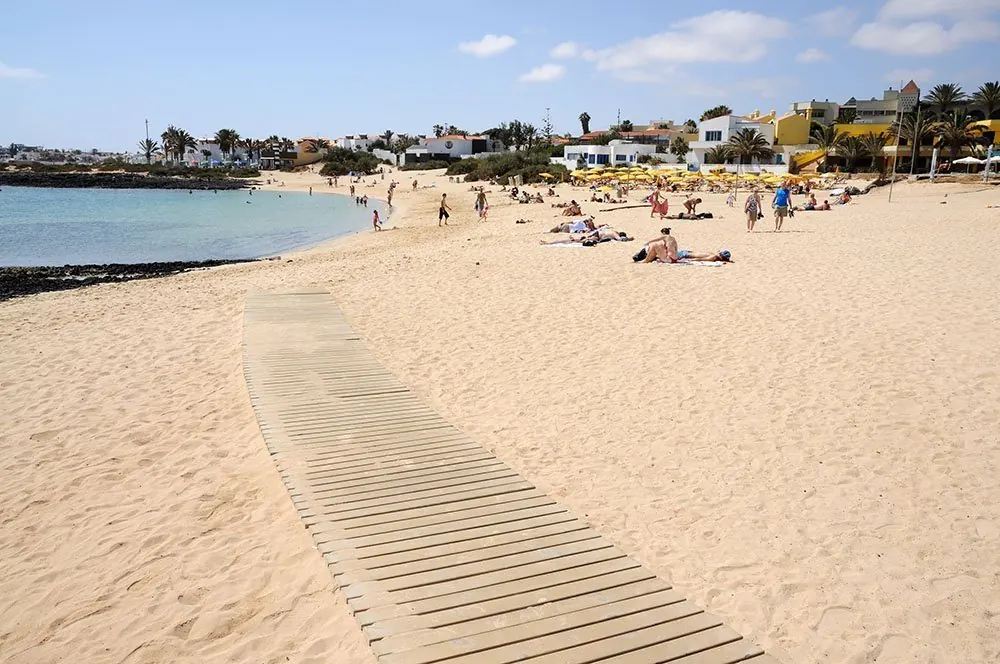
The sand is fine and golden, very clean, and forms one of the widest and most comfortable stretches on the island: you can walk barefoot for kilometres without a twinge.
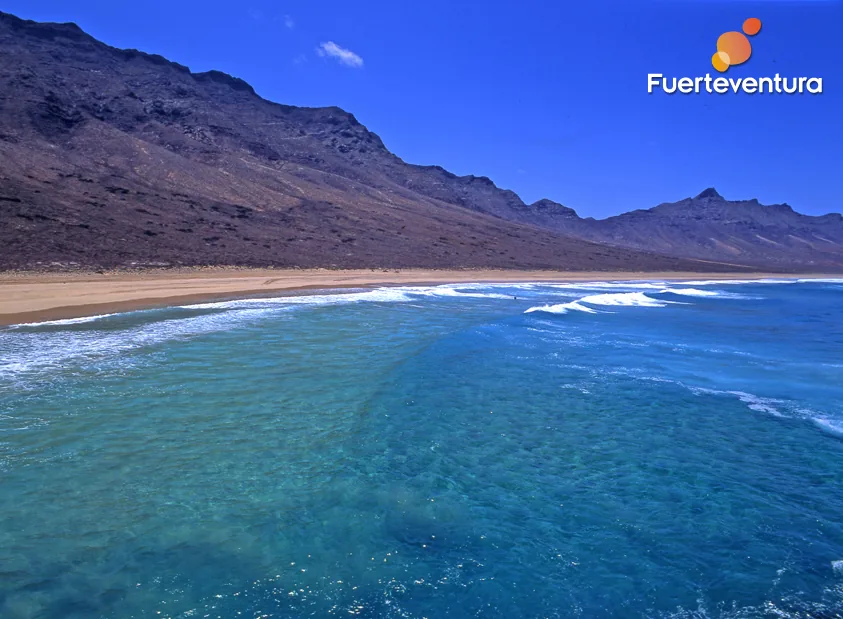
The water is calm inside the lagoon and moderate out in the open sea. This is not a dangerous beach like Cofete, but it is not a swimming pool either: beyond the sandbank there is swell, and it is best not to go too far out.
How to get there and where to park
The beach stretches along the FV-2 road, with several signposted access points between Costa Calma and Morro Jable.
about 10 minutes.
about 15 minutes.
around an hour and a quarter.
there are open dirt car parks at the various access points, all free. From some of them it is a fair walk down to the shore across sand: bear that in mind if you are heavily laden or have small children.
Facilities and nudism
It is a very long beach and the facilities are concentrated at either end, close to the hotel areas: that is where you will find beach bars, sunloungers and schools. Along the middle stretches there is nothing at all, which is part of the appeal.
Nudism is completely unremarkable in the sectors furthest from the access points, as it is along much of the Jandía coastline.
What’s nearby
On the same peninsula you have Playa de Jandía, the village of Morro Jable with its lighthouse and, on the far side of the massif, the vastness of Cofete. A full day in the south is enough for all three: it is laid out in the five-day route.
Frequently asked questions about Playa de Sotavento
When does the Sotavento lagoon form?
At low tide, in the Risco del Paso sector. It depends on each day’s tide cycle, so the practical thing is to check the table before you set off and plan your visit around low water.
Can you swim at Sotavento?
Yes. Inside the lagoon the water is warm, transparent and barely covers you, ideal with children. Out in the open sea there is more swell and it is wise to stay close to the shore.
Is it good for children?
Once the lagoon has formed, it is one of the best on the island. The two drawbacks are the wind, which is a nuisance on the towel, and the fact that from some car parks there is a good stretch to walk across sand.
Is it very windy?
Yes, and that is its calling card: it is precisely why it hosts world championships. It blows above all in the afternoon and in summer.
Are there beach bars and sunloungers?
At either end, next to the hotel areas, yes. Along the middle stretches of the beach there is nothing, so it is worth taking water with you.
Are Sotavento and Jandía the same beach?
No, even though both sit on the same peninsula and are often confused. Sotavento is the long beach between Costa Calma and Morro Jable, the one with the lagoon; Playa de Jandía is the one right next to Morro Jable itself.
Can you learn to windsurf here?
It is one of the best places in Europe to start, precisely because of the lagoon: flat, shallow water and steady wind. There are schools in the area.
Keep exploring